Office-to-housing transformation, Boxtel
This project emphasises that retrofitting is the most sustainable method to improve and exceed housing standards.
- B2A Founding Partner, Tjerk Boom
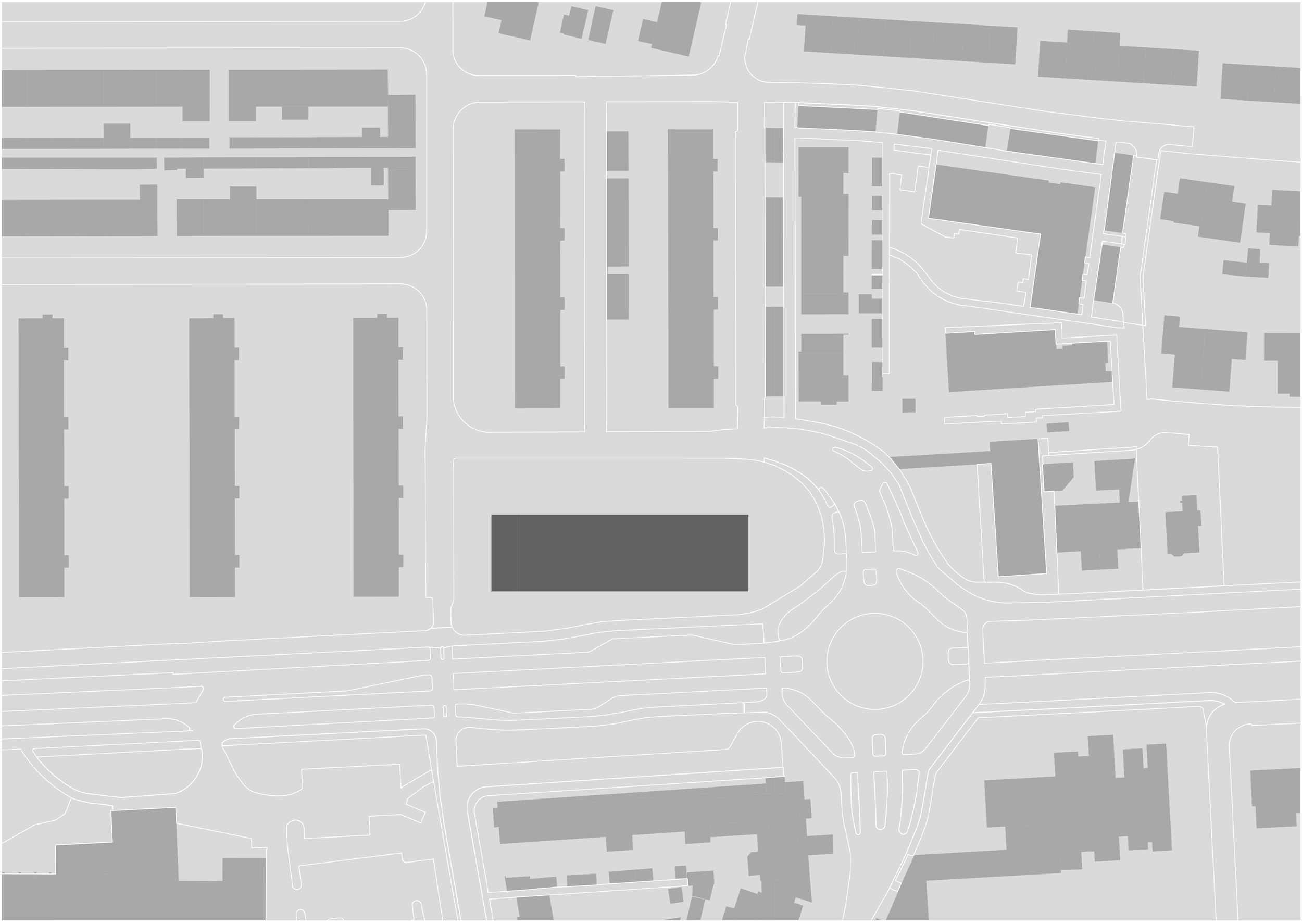
Siteplan
Project: Office-to-residential transformation
Client: Durbs b.v.
Location: Boxtel
Year: 2025-ongoing
Size: 3.800m2 + site
Project phases: SO, VO DO and TO (ongoing)
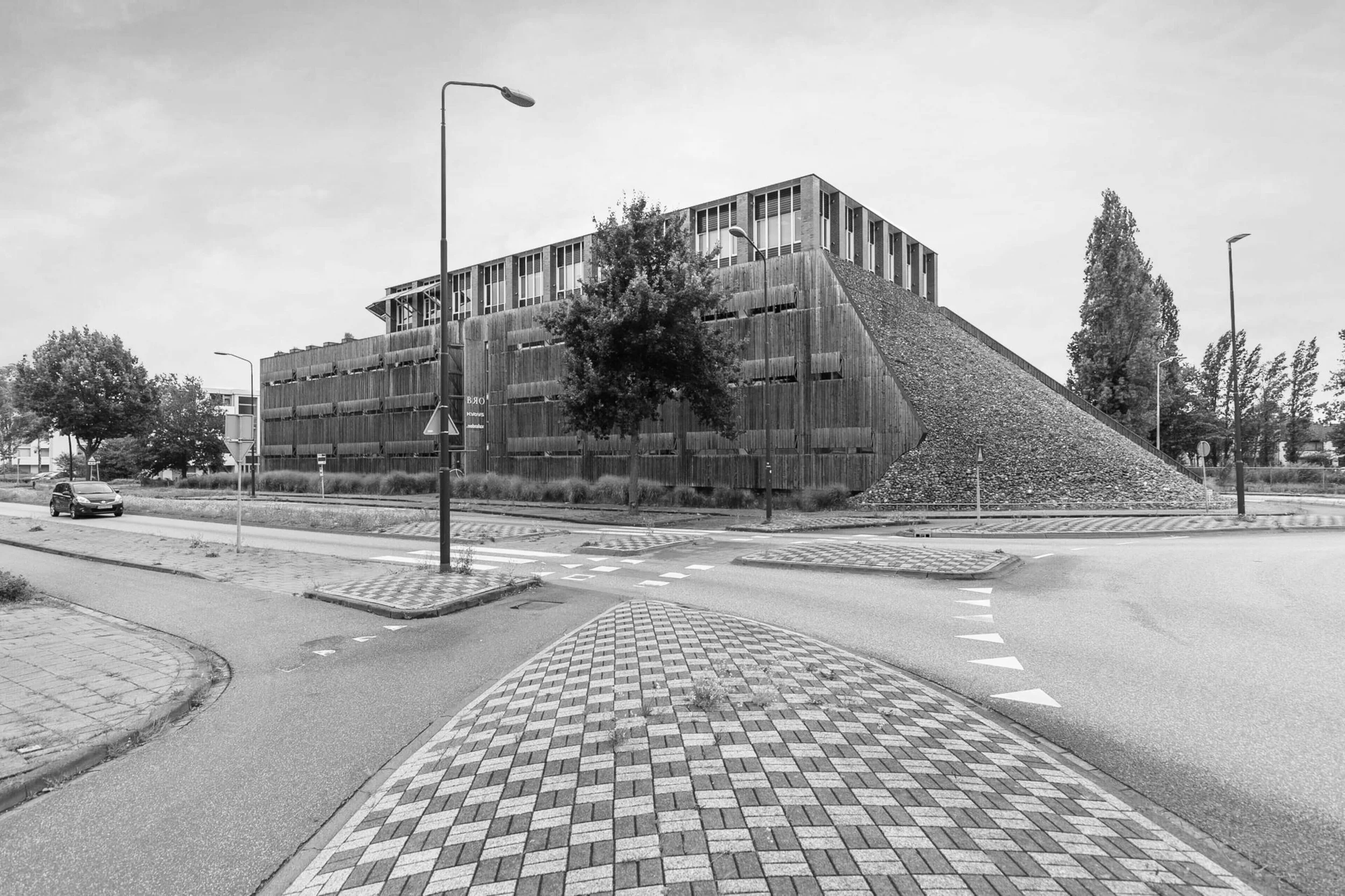
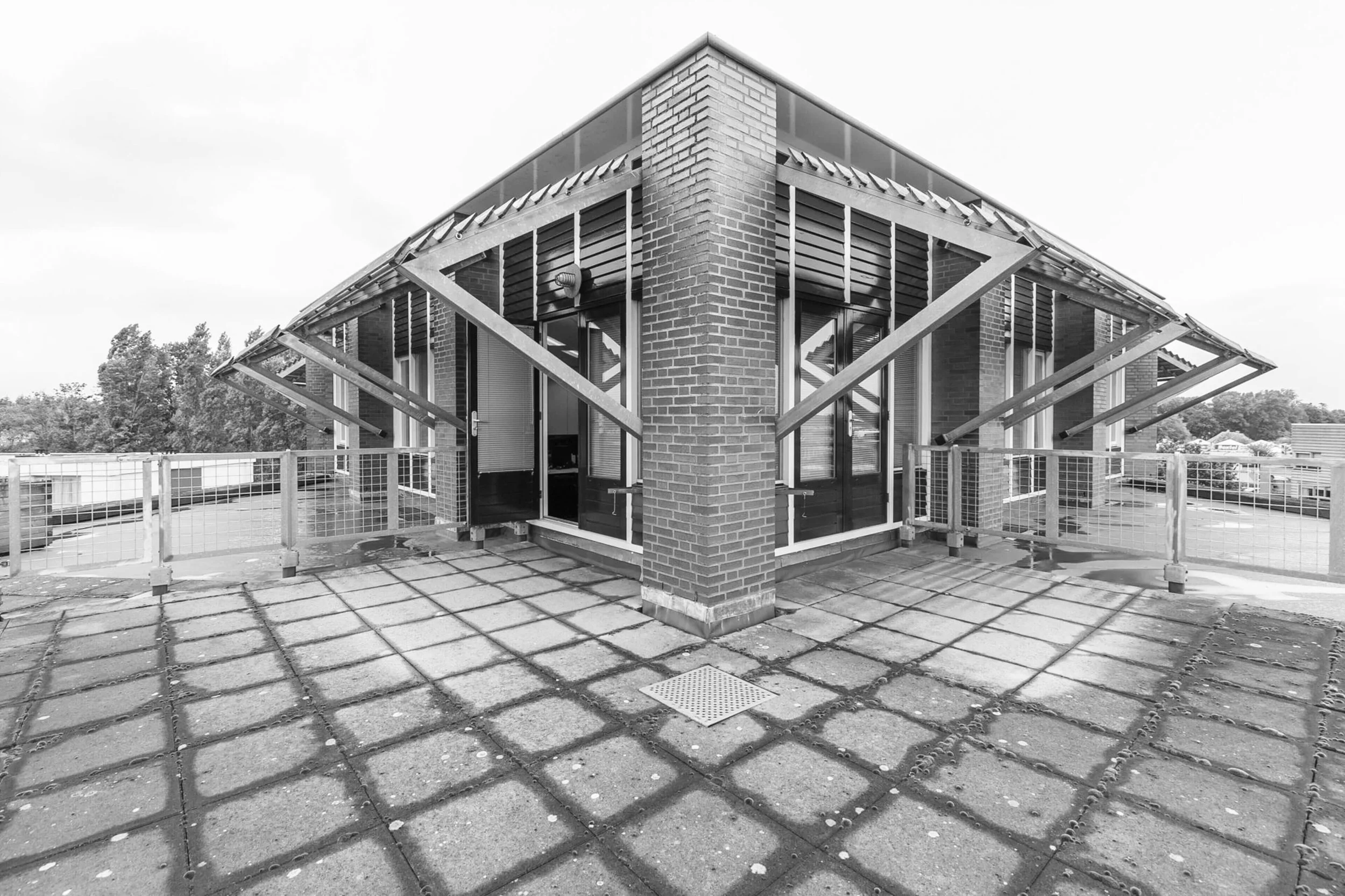
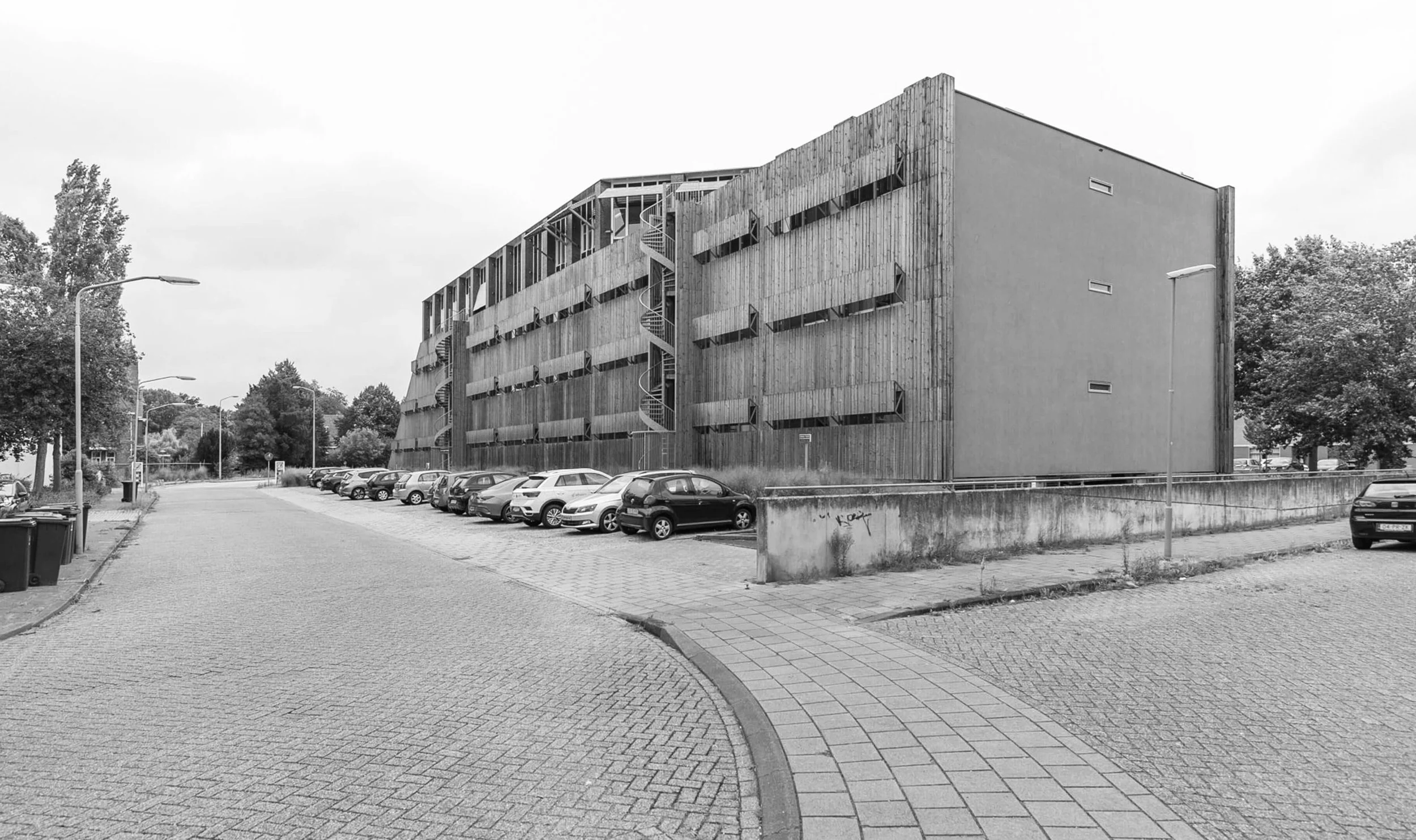
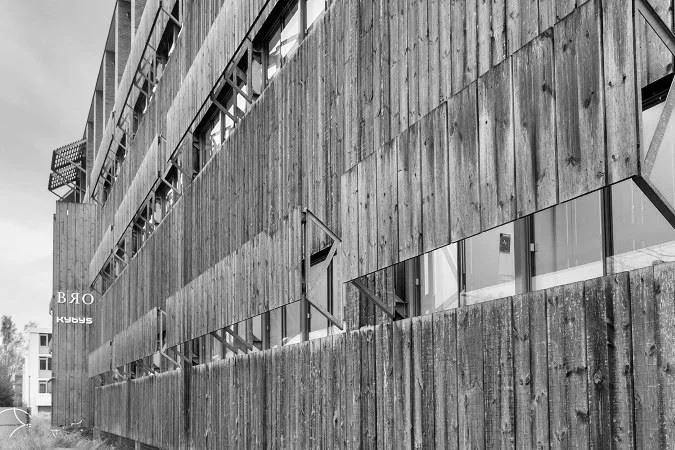
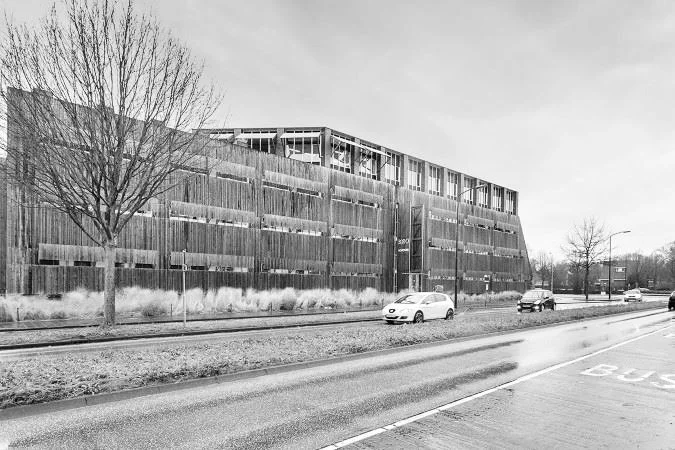
Views of the existing building
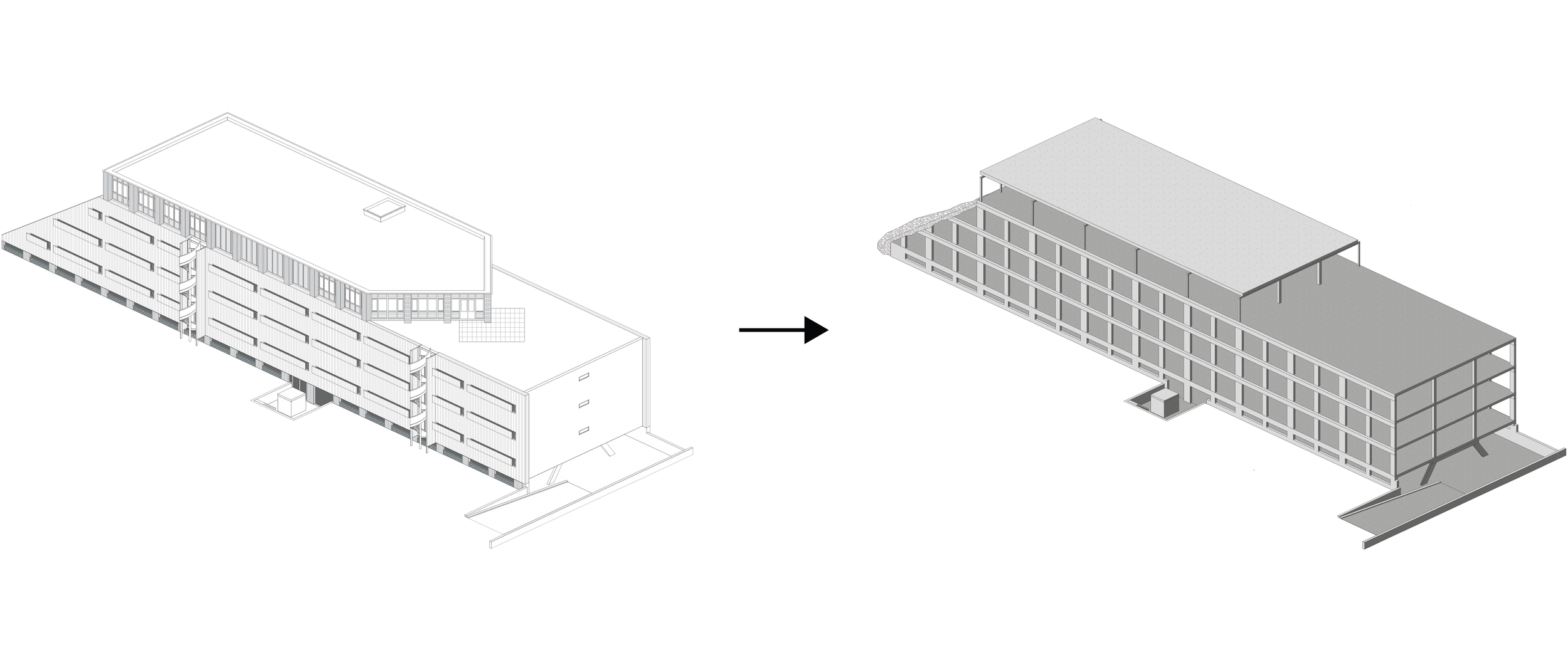
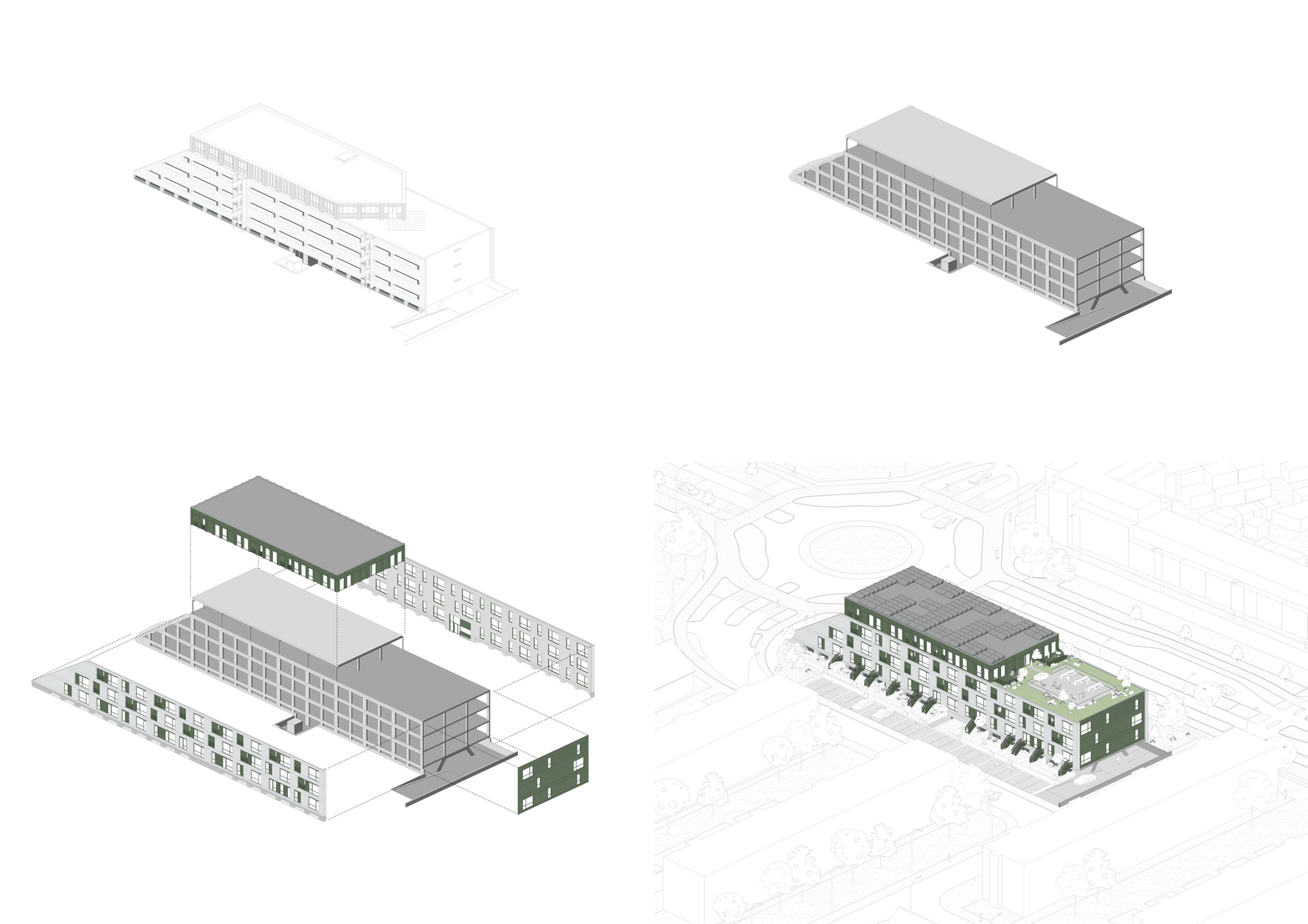
Concept of transformation (existing situation / re-use of existing structure)
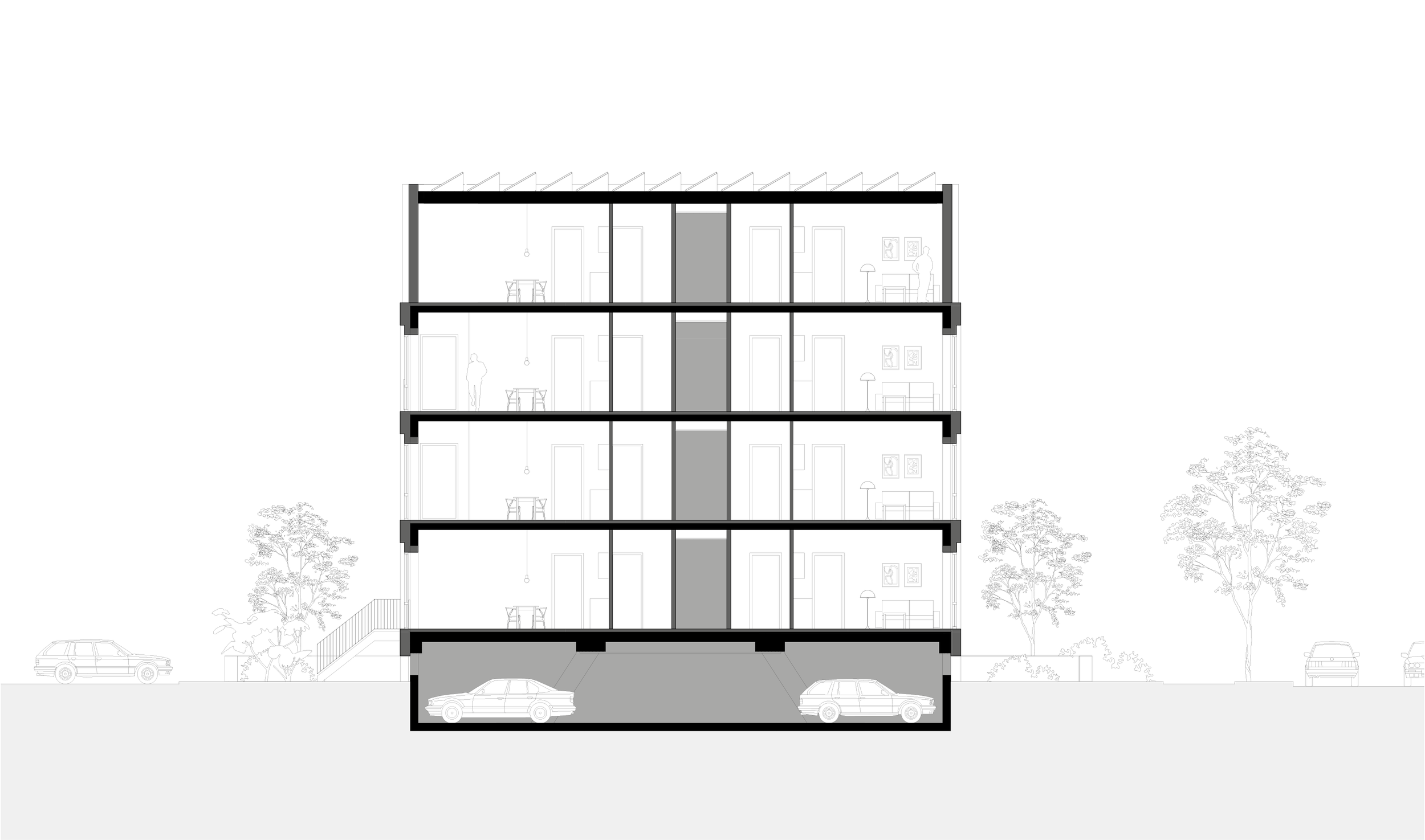
Cross section A-A (New situation, 2+ bedroom apartment with loggia - corridor - 2+ bedroom apartment)
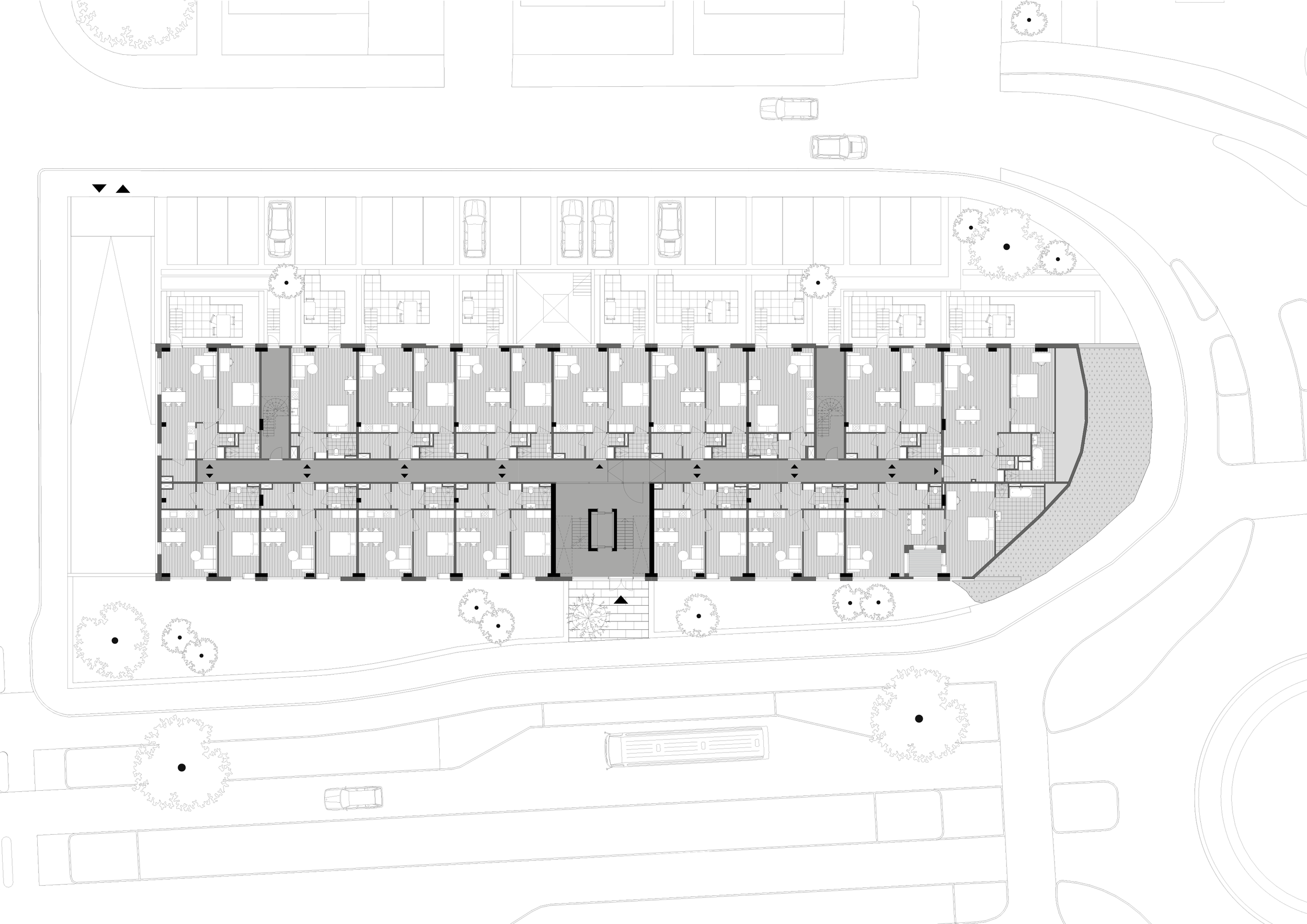
Floor plan, new situation ground floor +00
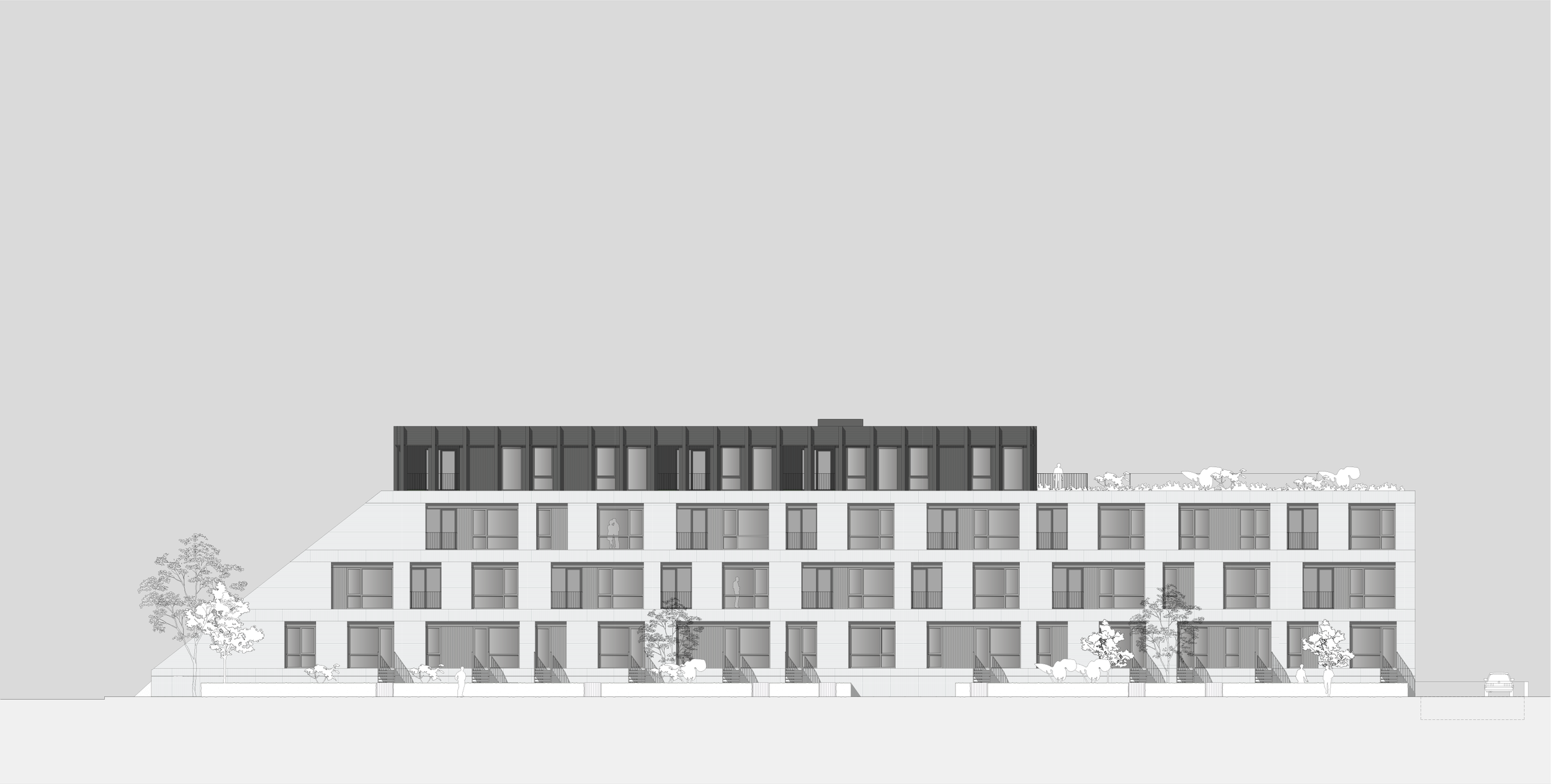
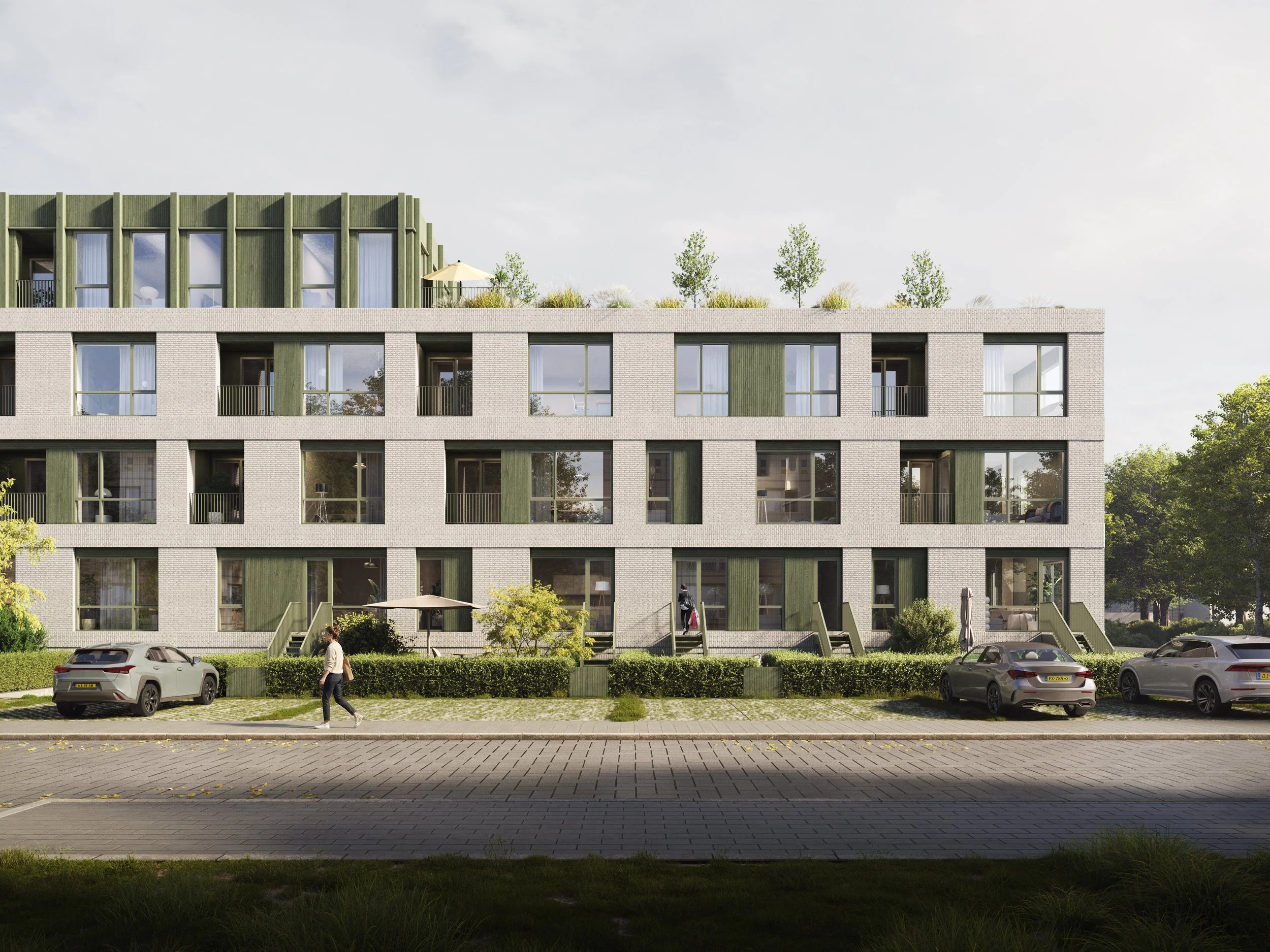
Facade east (private gardens and a collectieve roof terrace)
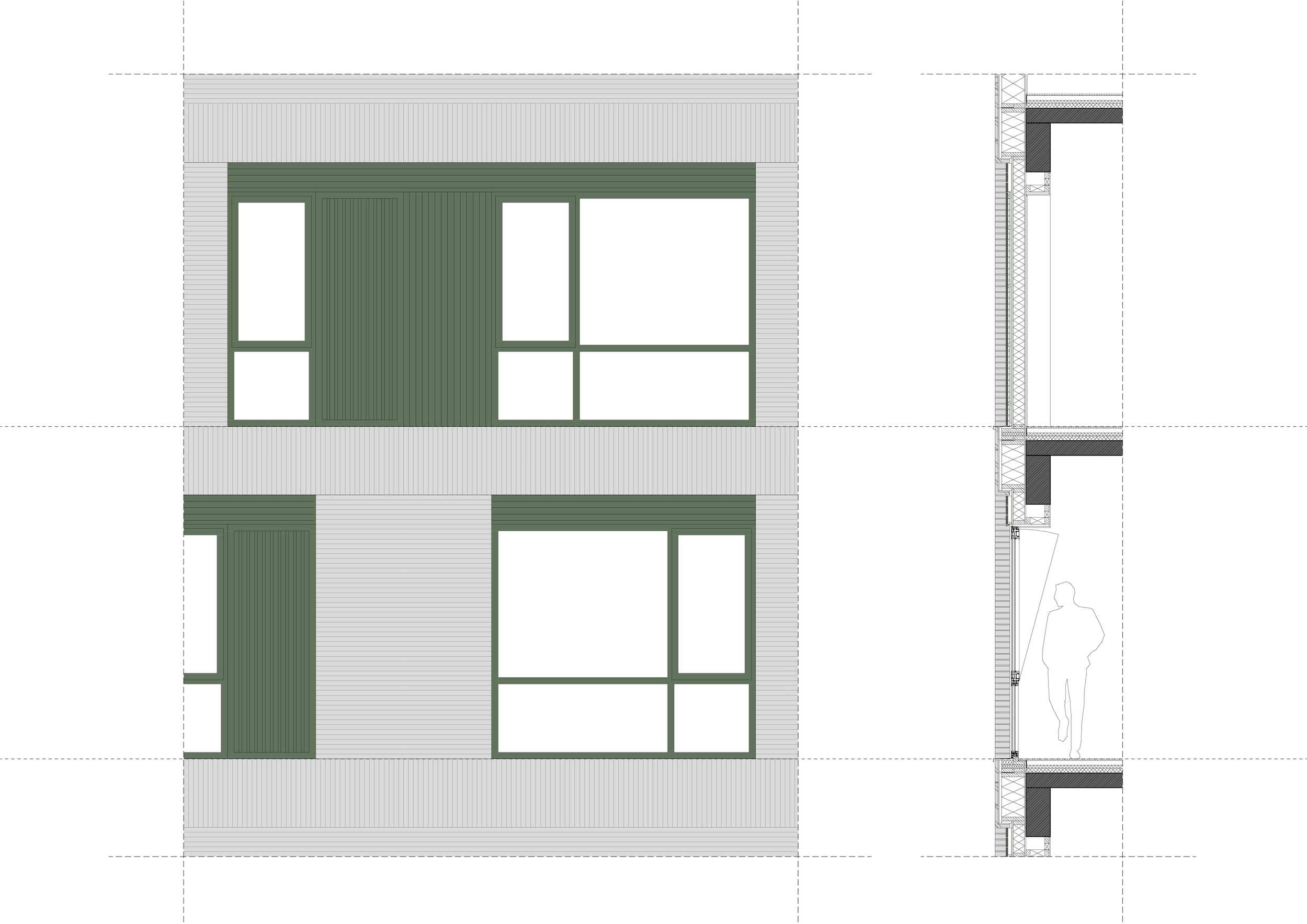
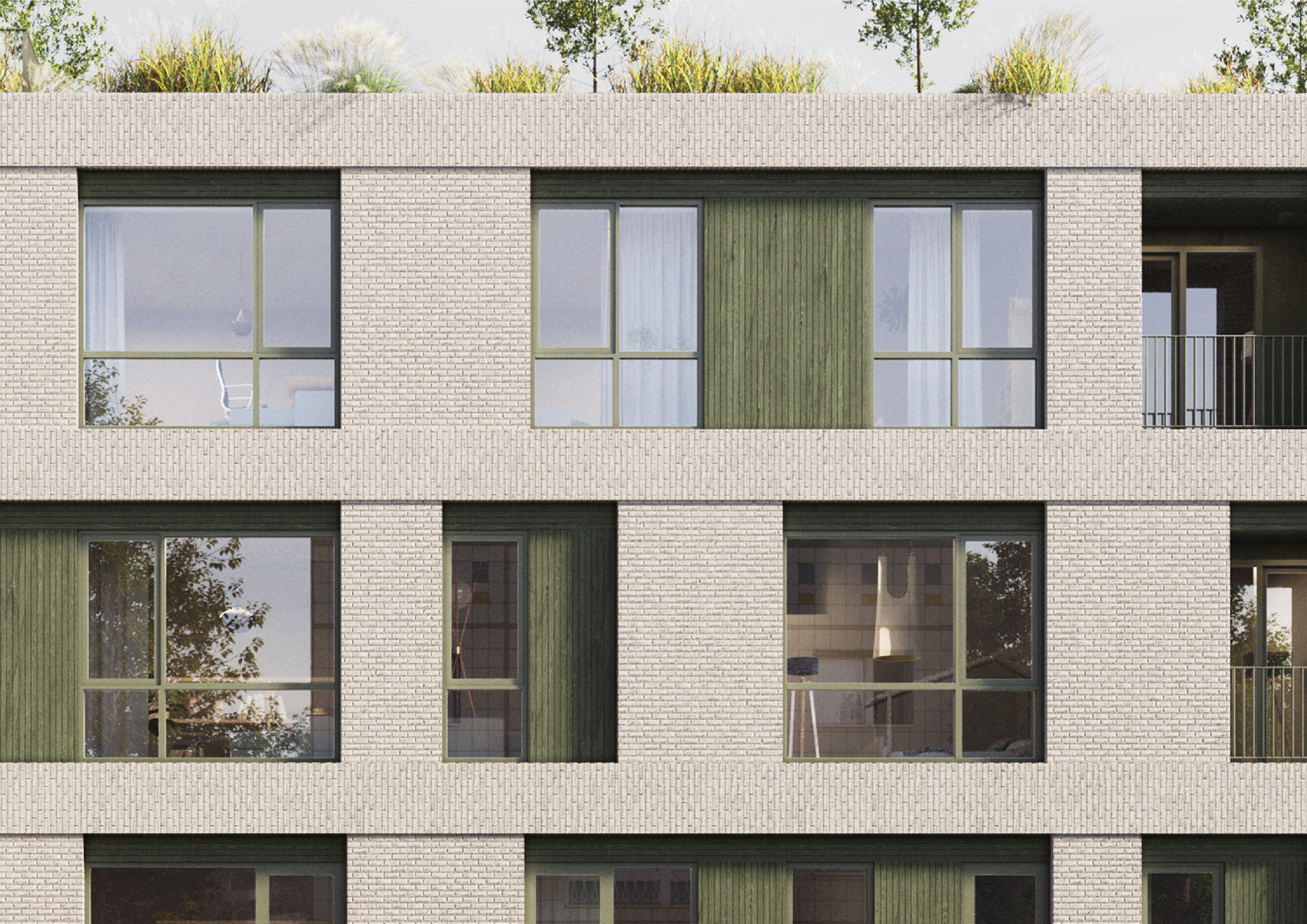
Facade detail
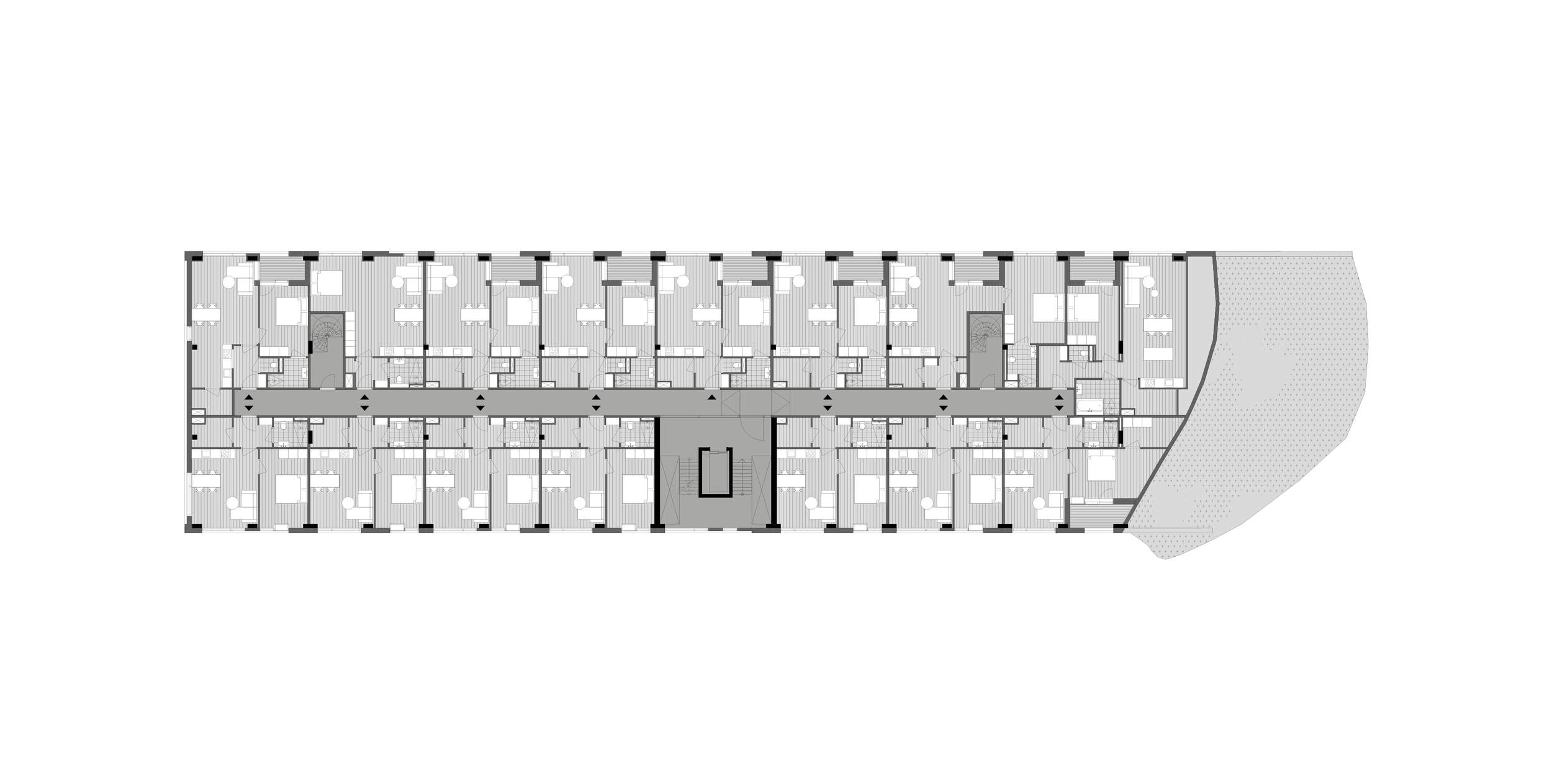
Floor plan, new situation level +01 (15 apartments)
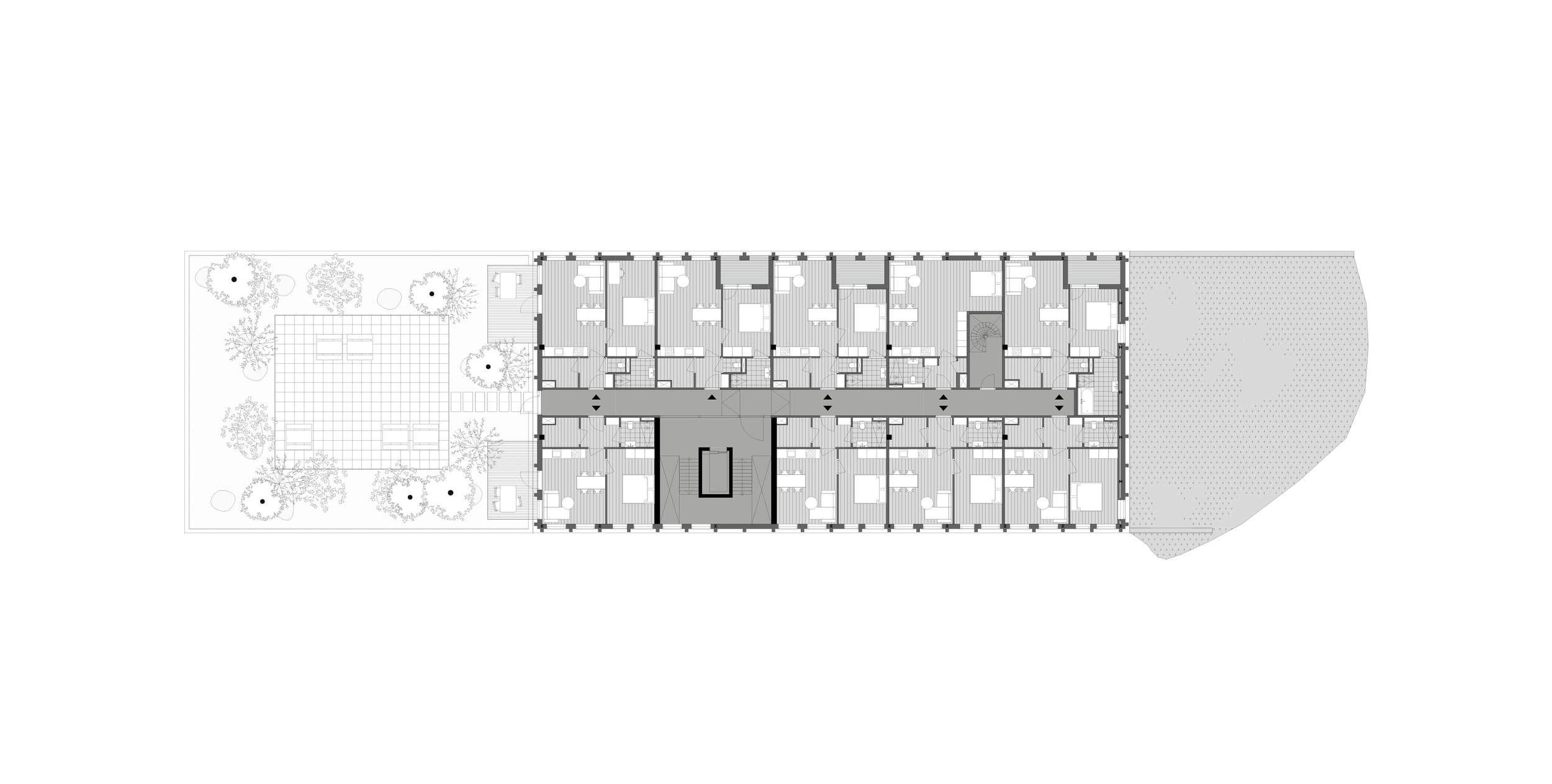
Floor plan, new situation level +03 (collective roof terrace and 9 apartments)
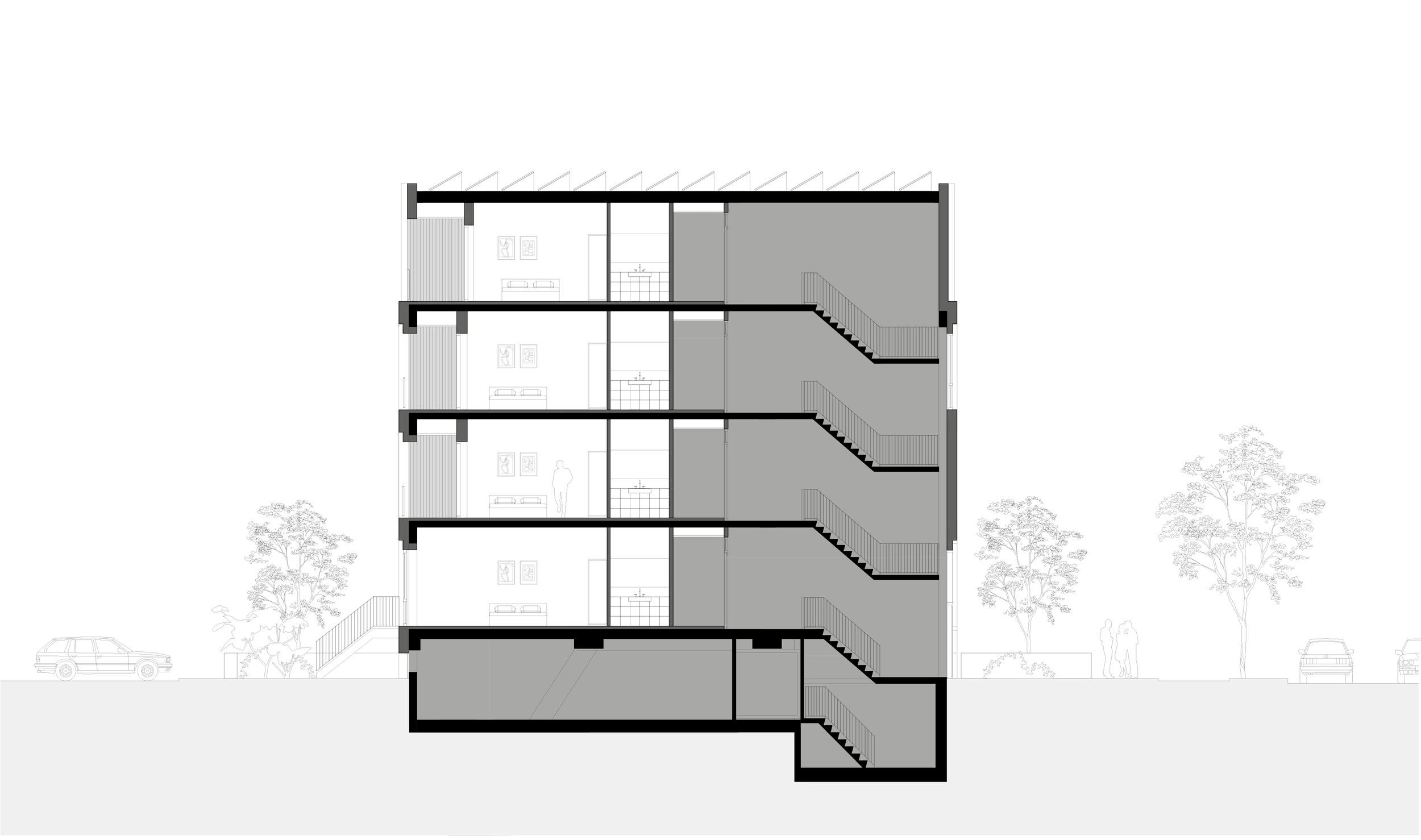
Cross section B-B (main entrance and stair case)
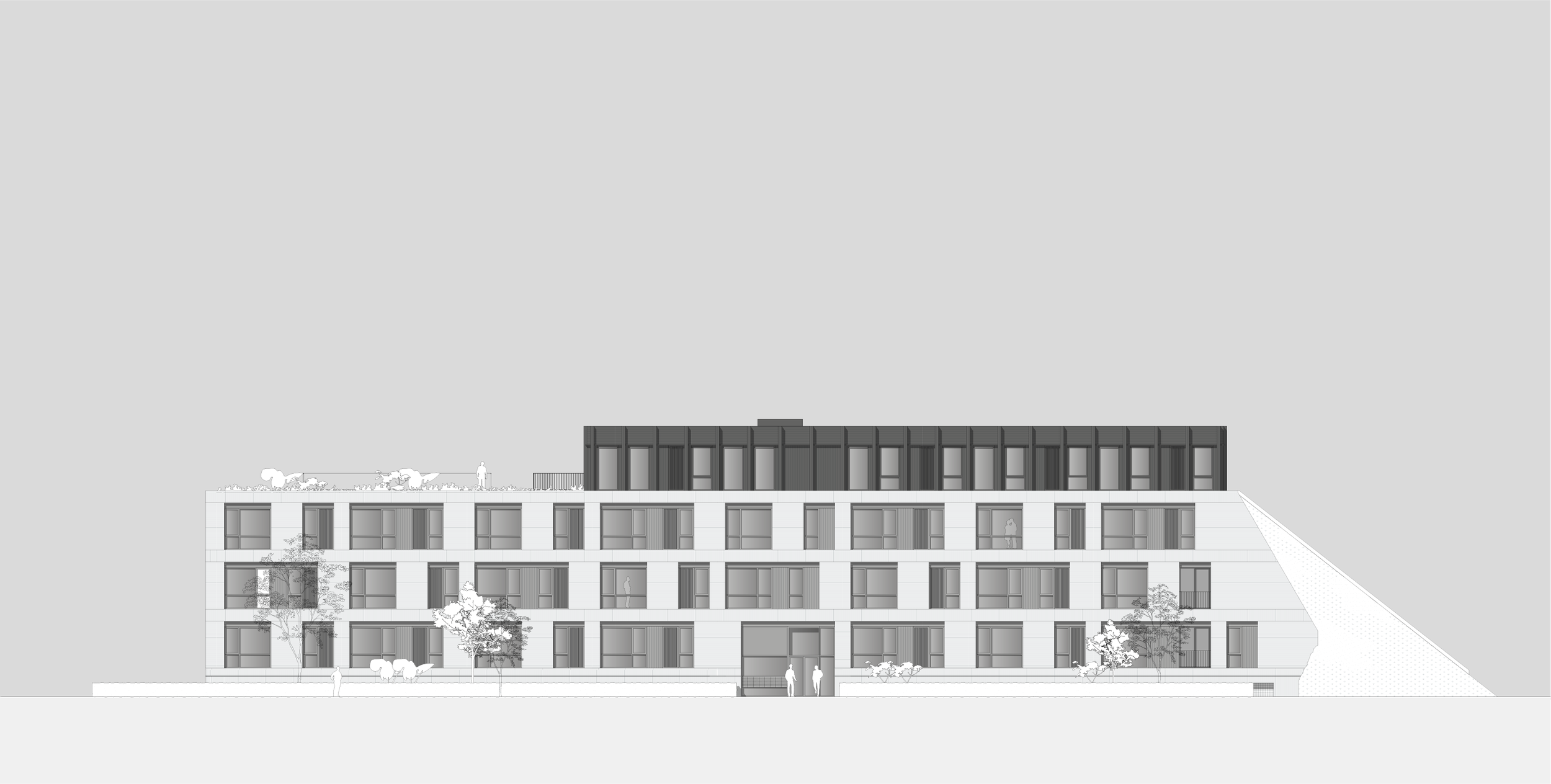
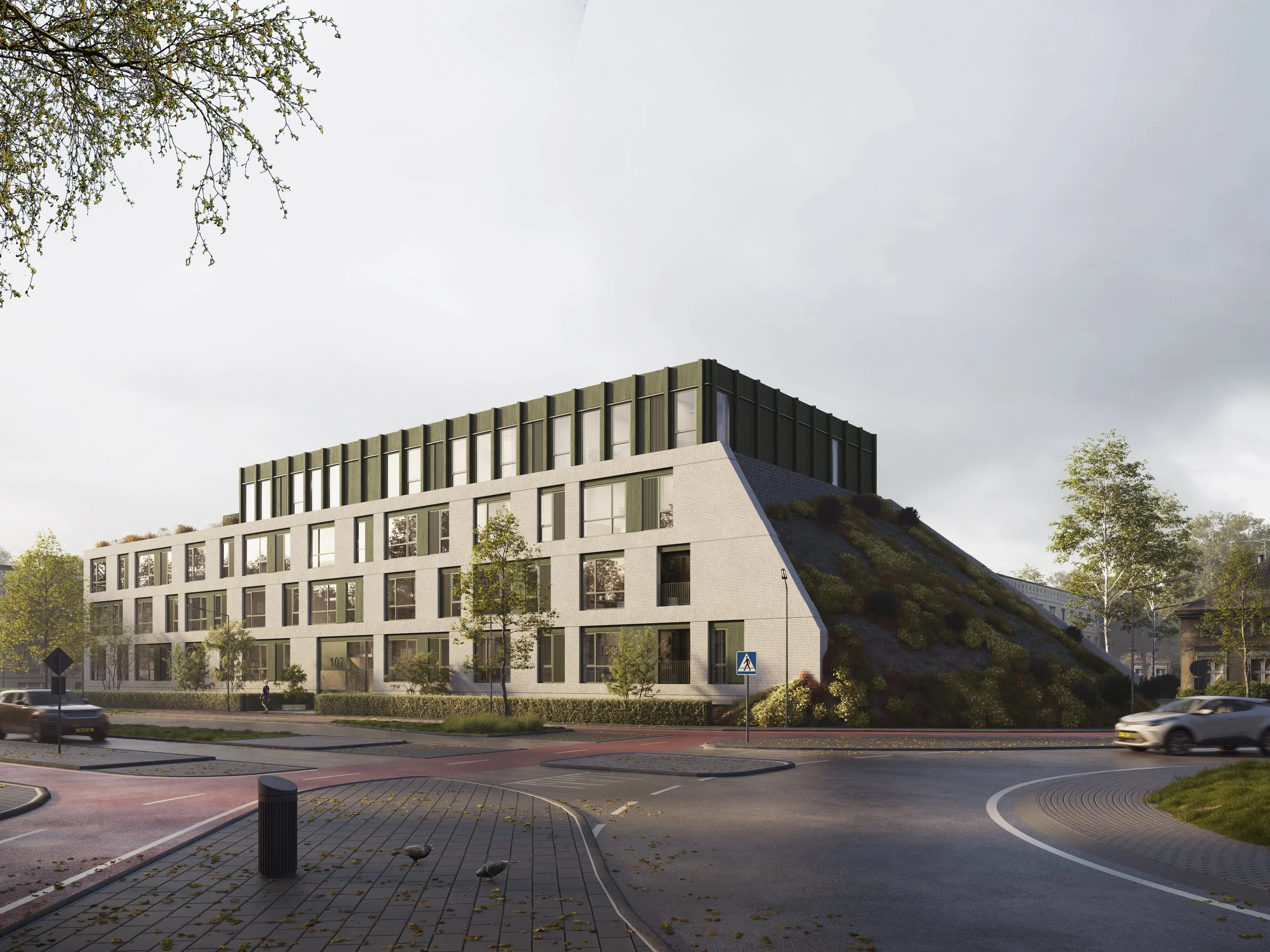
Facade west (main entrance along Bosscheweg)
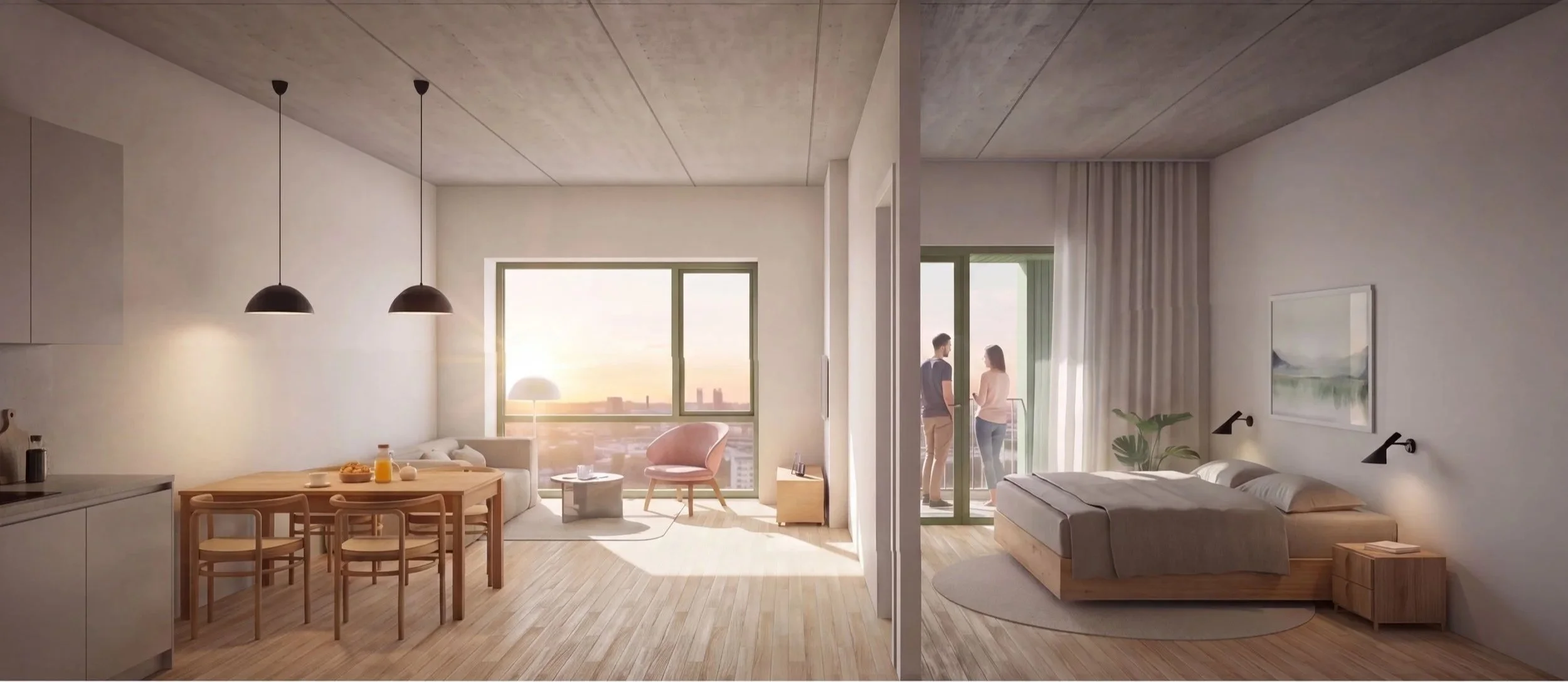
Interior illustration of apartment with outdoor a loggia
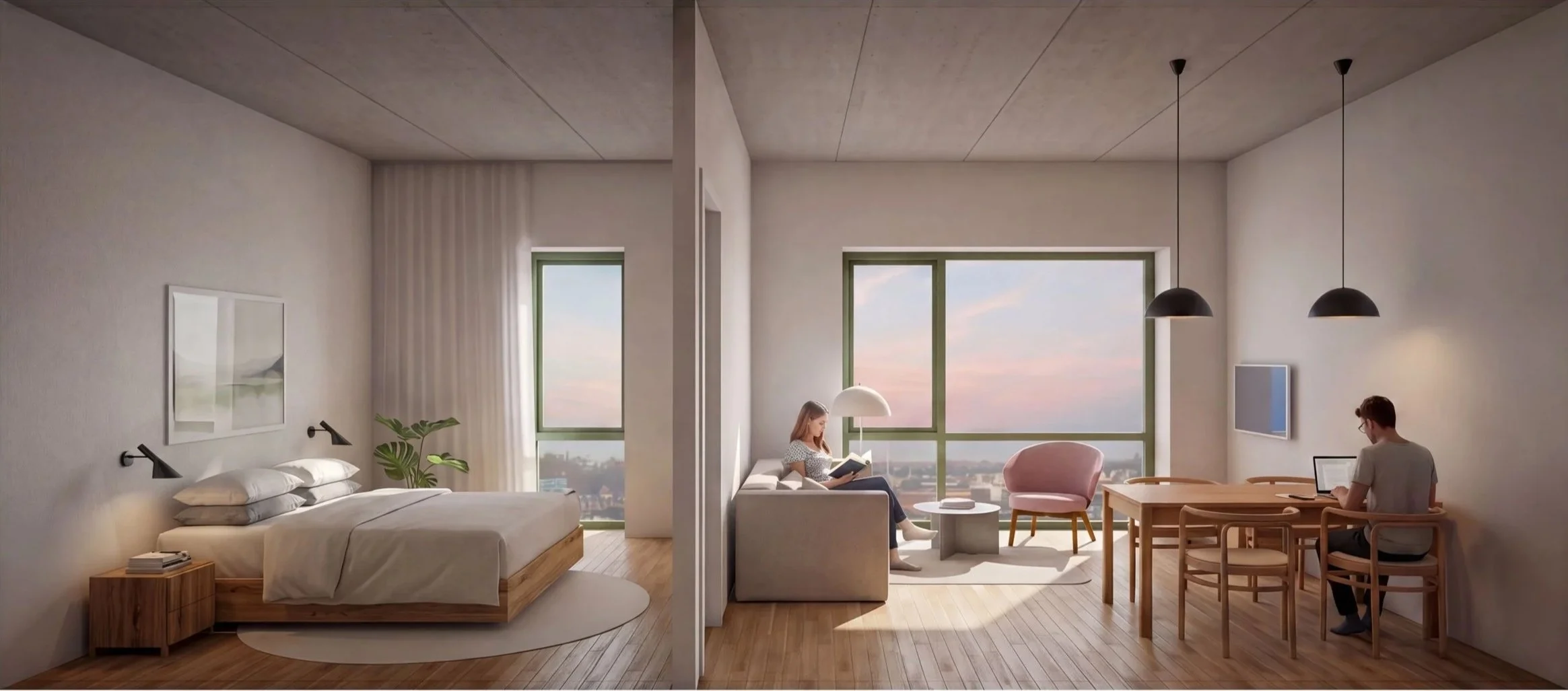
Interior illustration of apartment
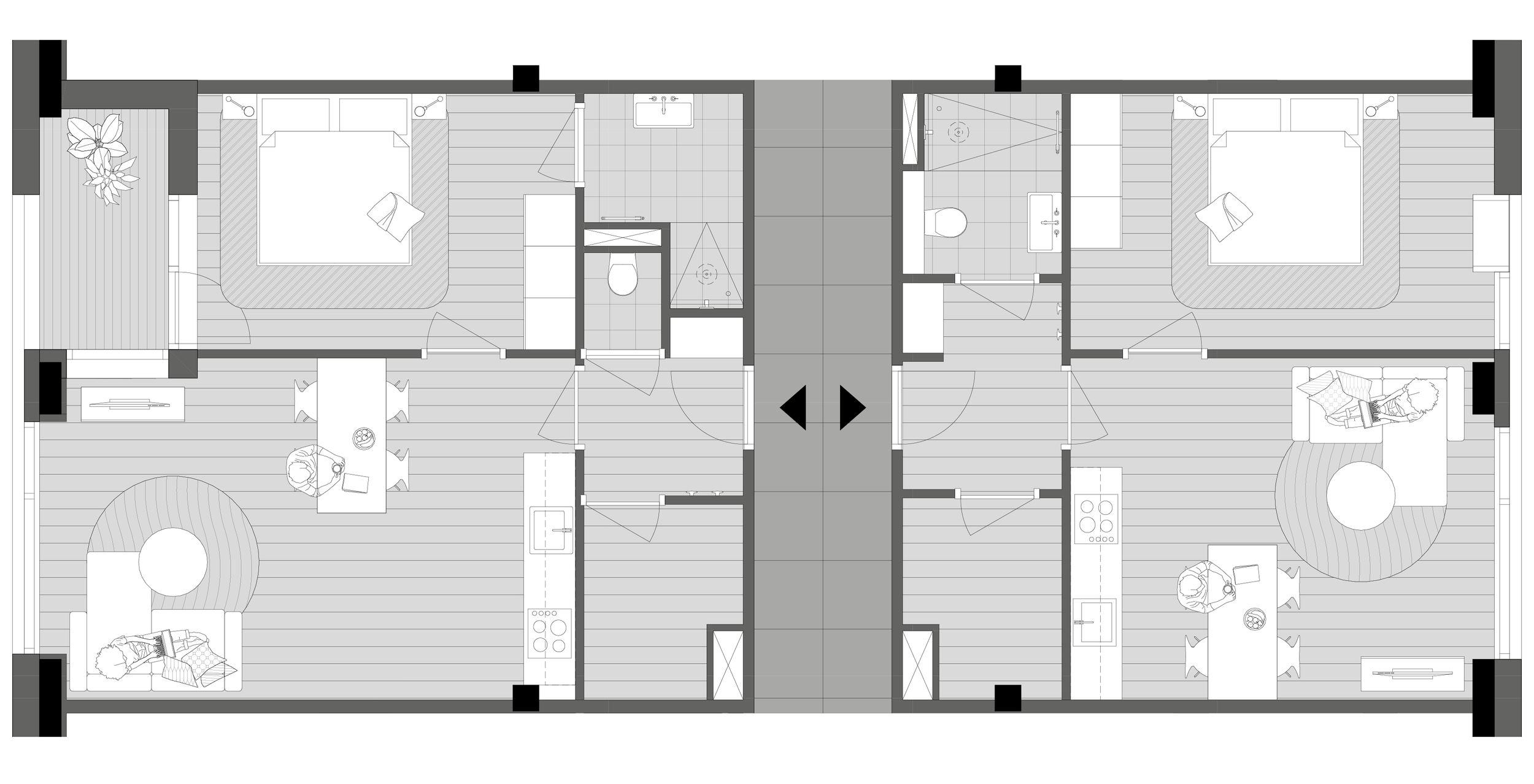
Floor plan (standard apartment types)
Description
Adaptive Reuse as a Spatial and Social Strategy
This project investigates the transformation of an existing office building along the Bosscheweg in Boxtel into a contemporary residential structure. Rather than approaching the site as a tabula rasa, the proposal positions adaptive reuse as both a spatial and environmental strategy, addressing housing demand while critically engaging with the existing built fabric. The surrounding context is defined by a heterogeneous urban condition, in which linear structures along the Bosscheweg coexist with a finer-grained residential neighborhood to the rear. This juxtaposition of scales and typologies informs the project’s central question: how can an introverted office building be reconfigured into a residential structure that mediates between bigger scale and domesticity?
Reinterpreting the Existing Structure
The project begins with a reading of the existing building as a latent spatial framework rather than a constraint. Its concrete skeleton—defined by a regular column grid and a floor-to-floor height of 3.4 meters—offers a robust and adaptable system capable of accommodating new forms of inhabitation. The relatively shallow floor plates play a crucial role in this reinterpretation. Unlike deep office buildings, the limited depth allows daylight to penetrate the full width of the building, enabling the insertion of residential units without significant structural alteration. In this sense, the existing geometry is not only retained but actively leveraged to support a new program. The structural grid, with a span of 7.2 meters, establishes a clear spatial rhythm. This dimension enables the subdivision of space into well-proportioned domestic apartments, balancing efficiency with generosity. The resulting interiors exceed the minimal standards typically associated with affordable housing, suggesting an alternative approach in which spatial quality is not sacrificed for economy.
Adaptive Reuse as Environmental Practice
The decision to retain the existing concrete shell is framed not only as a technical or economic choice, but as an environmental imperative. Demolition is understood as a loss of embedded energy and material intelligence. By preserving the primary structure, the project significantly reduces embodied carbon while extending the lifecycle of the building. Adaptive reuse is therefore positioned as a critical design approach within contemporary architectural practice, where sustainability is addressed through transformation rather than replacement.
From Monolith to Domestic Assemblage
A central ambition of the project is the transformation of the building’s identity. The existing office structure is characterized by its monolithic and introverted expression, reflecting a program that priorities efficiency over human experience. The proposed intervention redefines this condition by introducing an architectural language aligned with residential inhabitation. The building is rearticulated as a composition of distinct yet interrelated elements, allowing it to operate simultaneously at multiple scales. This shift—from singular object to articulated assemblage—enables the building to engage more directly with its context. It mediates between the larger scale of the Bosscheweg and the more intimate scale of the adjacent residential fabric.
Façade as Interface
The façade is conceived not as a surface treatment, but as a critical interface between inside and outside, private and public, building and city. Feedback from local residents highlighted the perceived closed nature of the existing structure, reinforcing the need for a more open and communicative architectural expression. The new façade introduces depth, rhythm, and material differentiation to break down the building’s scale and enhance its relational qualities. Transparency and layering are employed to establish visual connections between the apartments and the street, fostering a sense of openness and social presence. In this way, the façade operates both performatively—regulating light, climate, and privacy—and symbolically, contributing to a renewed collective identity.
Material Strategy: Between Continuity and Transformation
The materialization of the project negotiates between continuity with the local context and the expression of transformation. The use of brick slips references the masonry traditions prevalent in the area, while simultaneously reducing material consumption and structural load. Timber cladding introduces a contrasting layer of warmth and tactility, reinforcing the building’s shift toward a more domestic character. Together, these materials articulate the building as a hybrid condition—situated between its former life as an office and its new role as housing.
Landscape as Architectural Extension
The sloped volume of the building is reimagined as a productive ecological surface. Rather than treating it as residual form, the design integrates intensive planting to create a living layer that evolves over time. Due to its north-facing orientation, the planting strategy focuses on shade-tolerant evergreen species, ensuring year-round presence. Areas of selective non-intervention are introduced to support biodiversity, positioning the building as part of a broader ecological network. The chromatic and textural qualities of this planted surface inform the overall architectural expression, blurring the boundary between building and landscape.
Conclusion: Toward a Transformative Practice
This project frames transformation not as a secondary strategy, but as a primary mode of architectural production. By working with the existing structure, the design reveals latent spatial potentials while addressing urgent environmental and social challenges. The result is not merely a conversion, but a redefinition: a building that shifts from obsolescence to relevance, from isolation to integration, and from monolithic object to inhabited architecture.
Visualisations by Render-lab, Berlin