Barn house II, Cothen
“Rather than an object placed in a landscape, “Kapschuur” is conceived as a sectional field condition—where a singular roof, carved spatial sequence, and porous thresholds redefine domesticity through continuous negotiation between interior and agricultural horizon.”
- B2A Founding Partner, Tjerk Boom
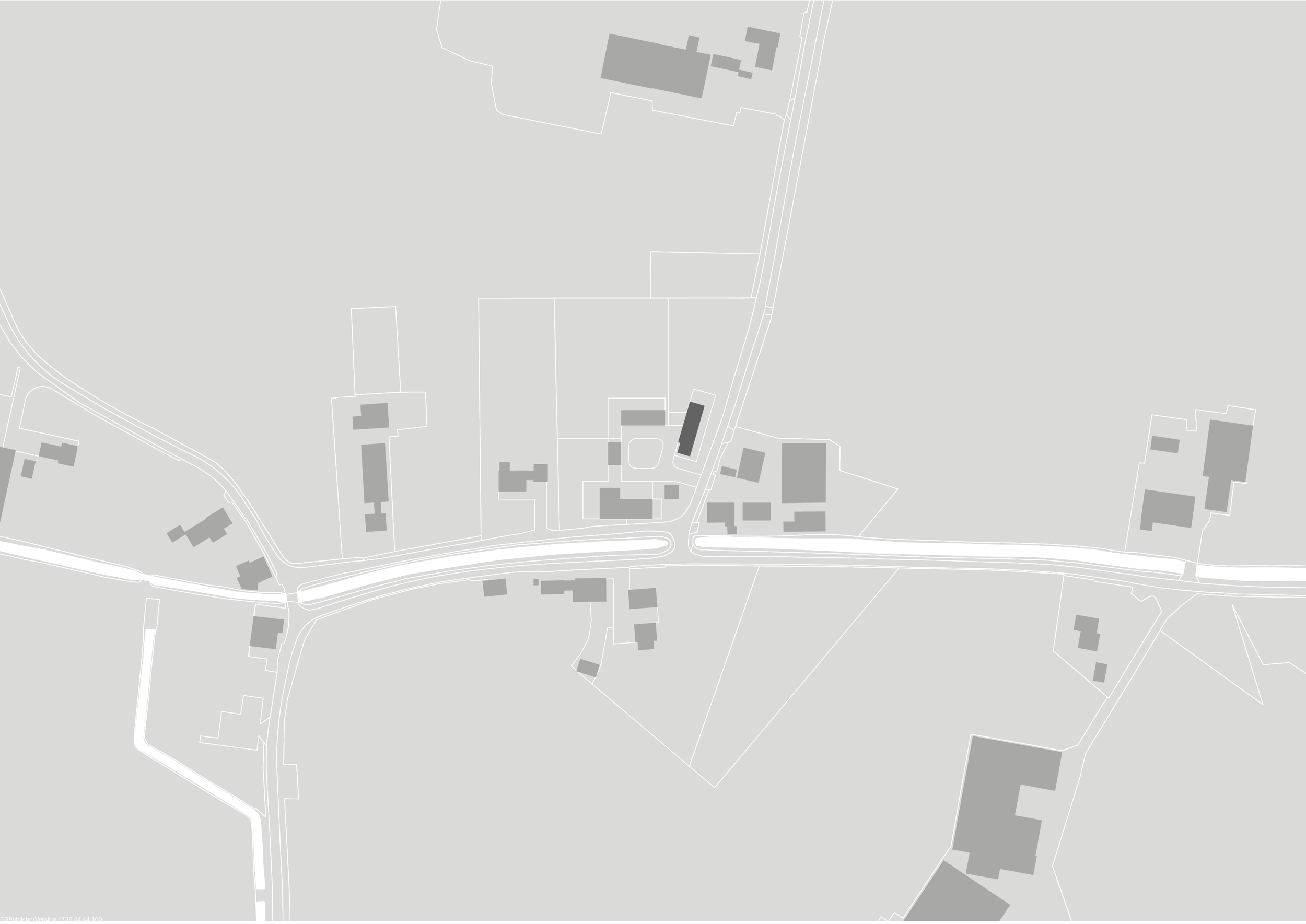
Siteplan
Project: Housing / Masterplan
Client: Private
Location: Cothen
Year: 2021-ongoing
Size masterplan: 7750m2 (woonerf)
Size new build homes: 250m2
Project phases: Masterplan, SO, VO, DO (building permission) and TO
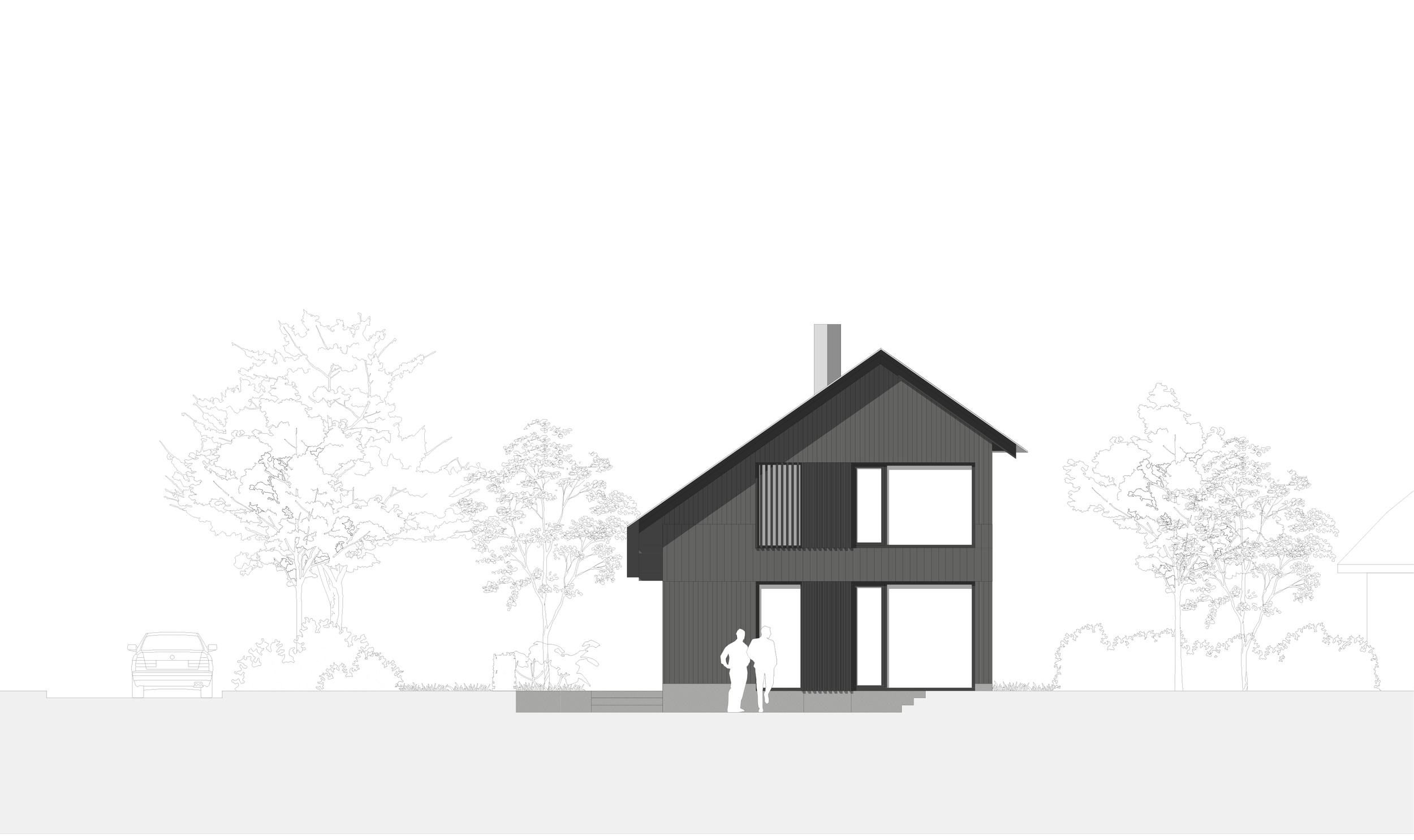
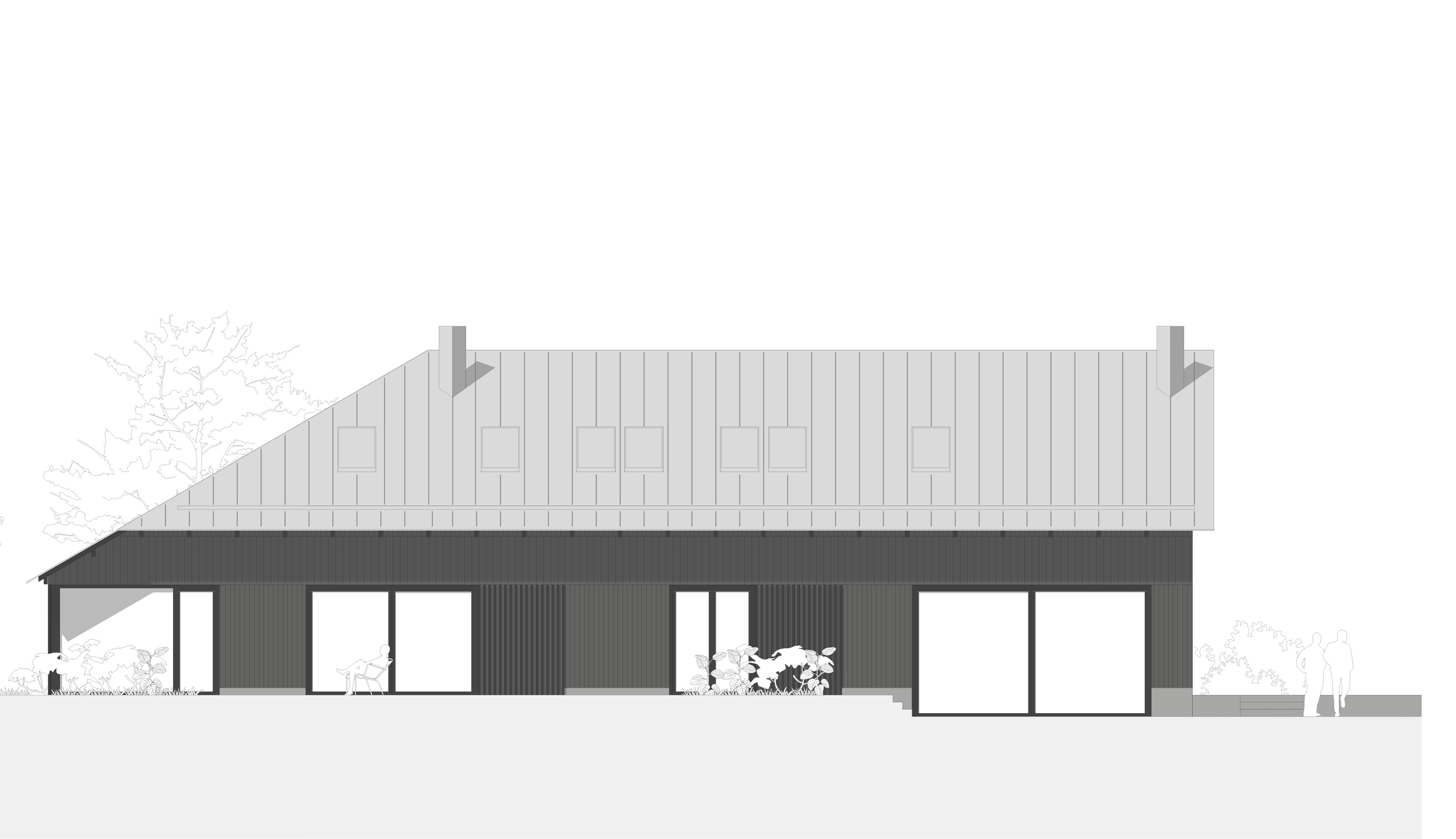
Facade (west)
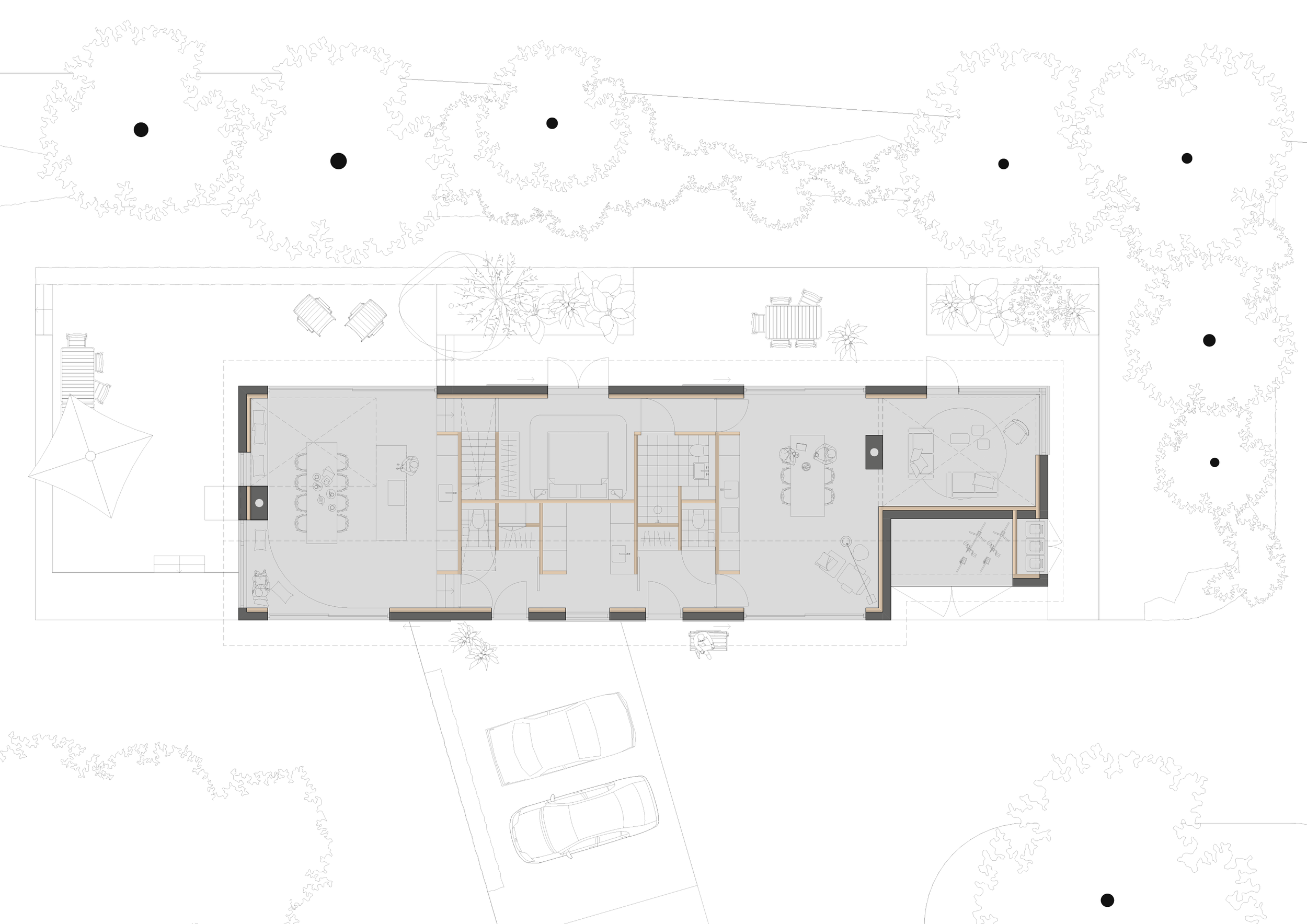
Ground floor +00
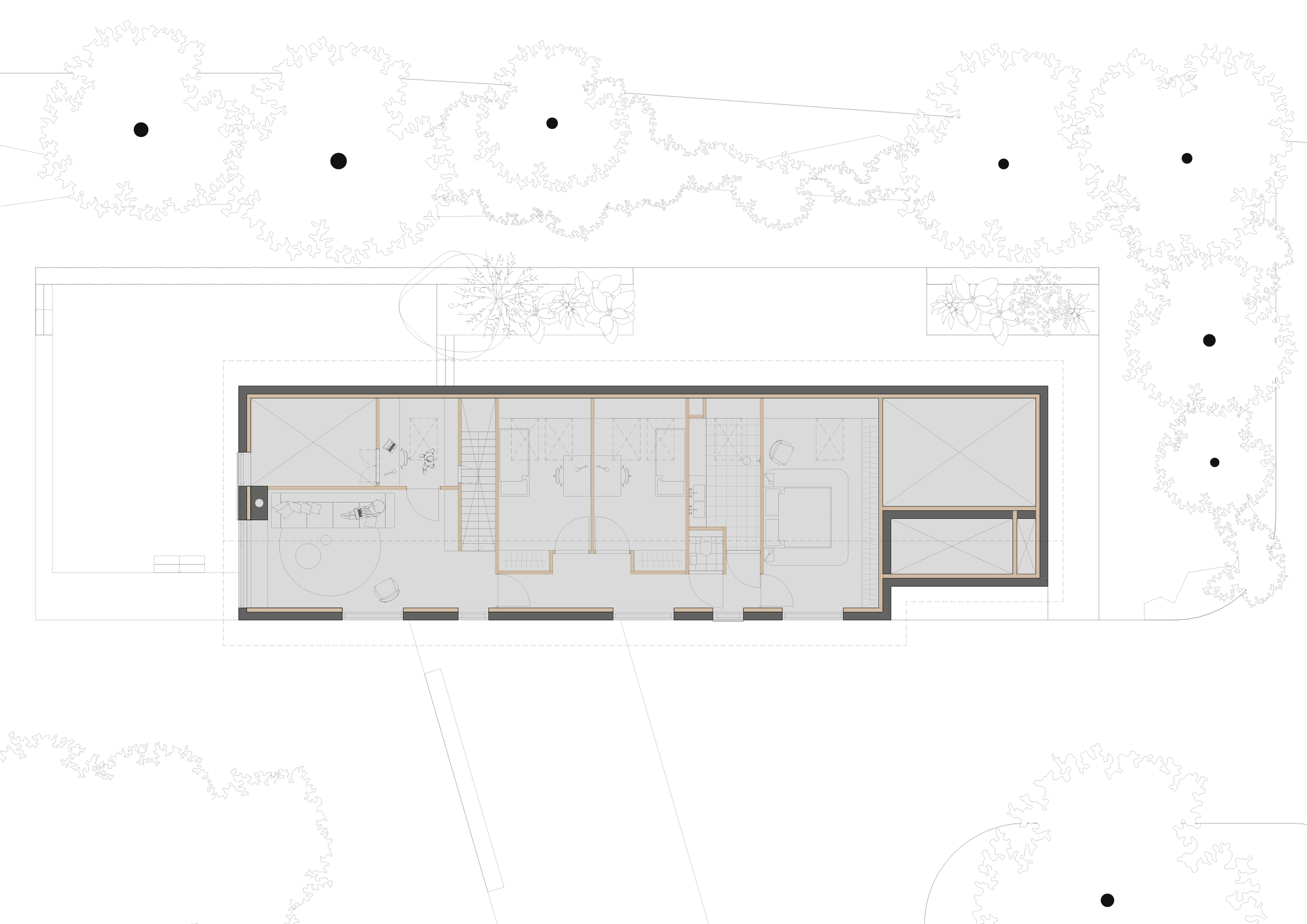
First floor +01
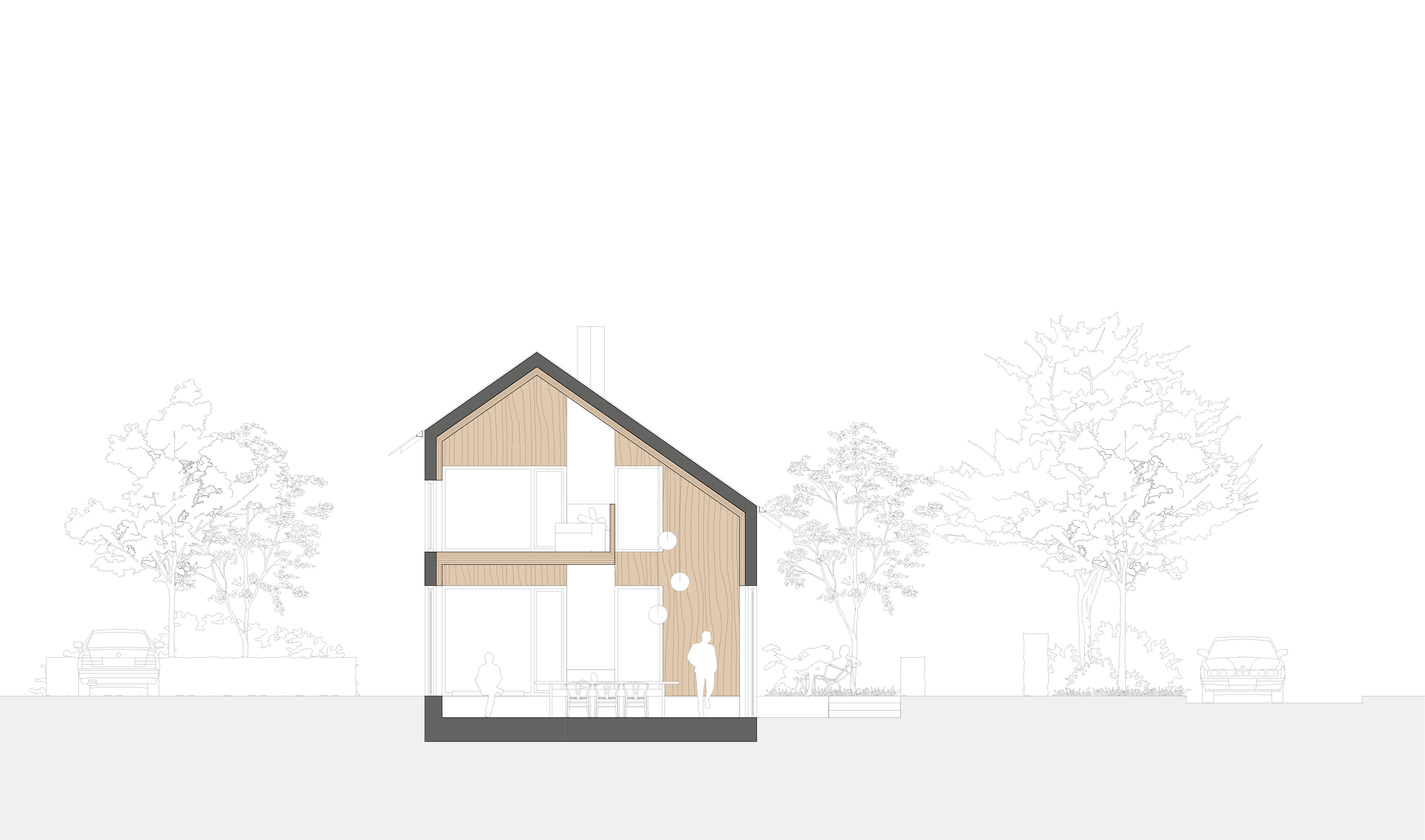
Short section, living room / lounge
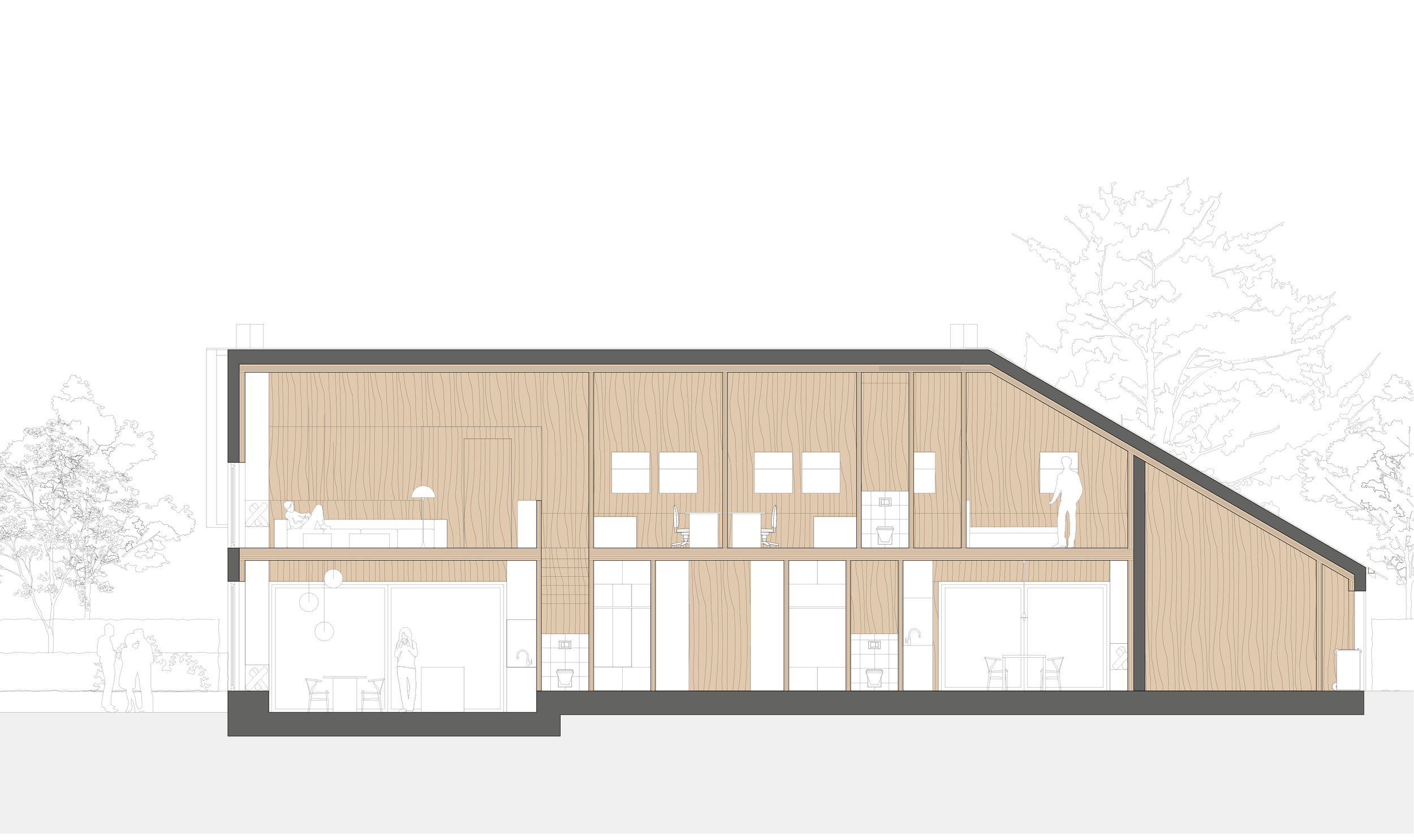
Long section, sunken living space towards apple orchard
Facade (north)
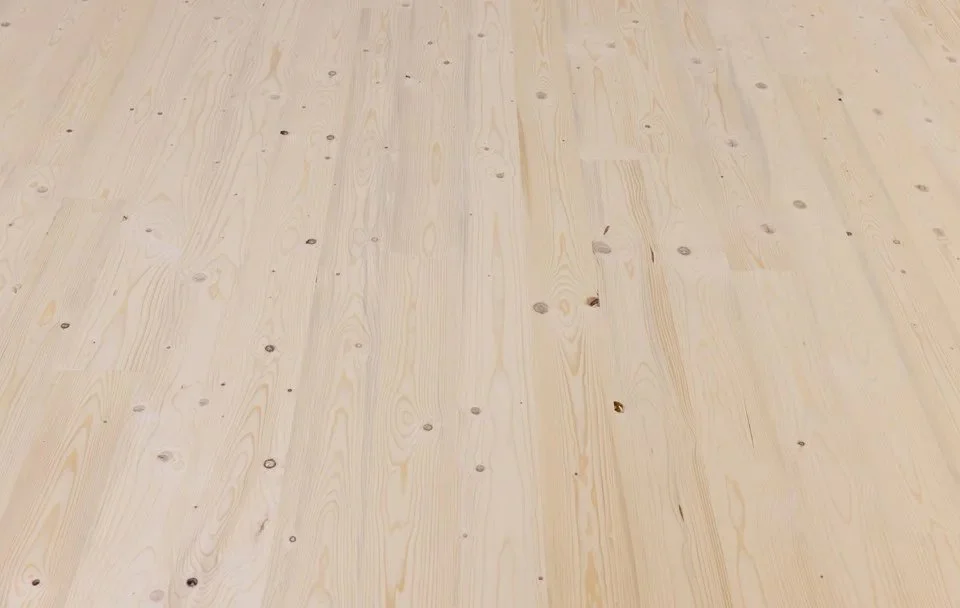
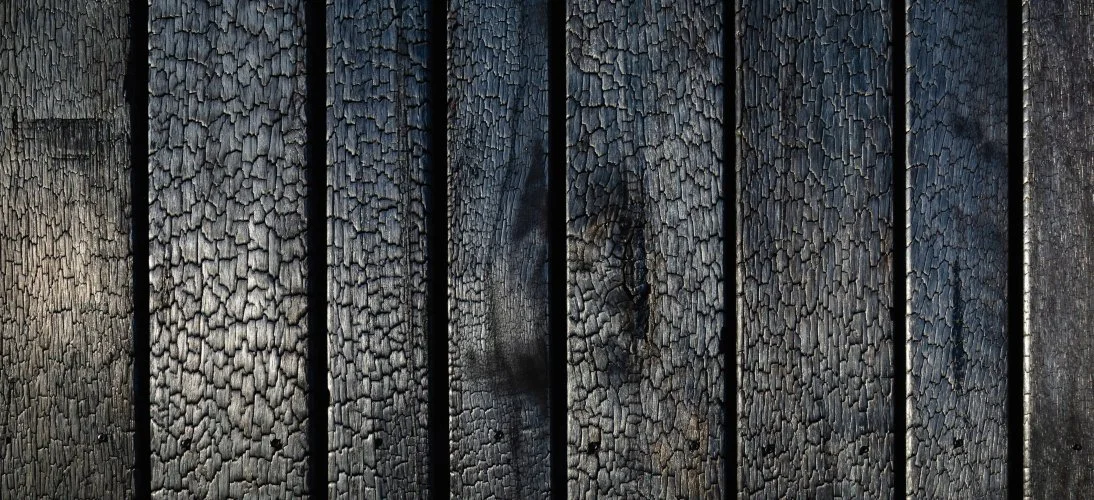
Selection of colors, textures, and materials

Description
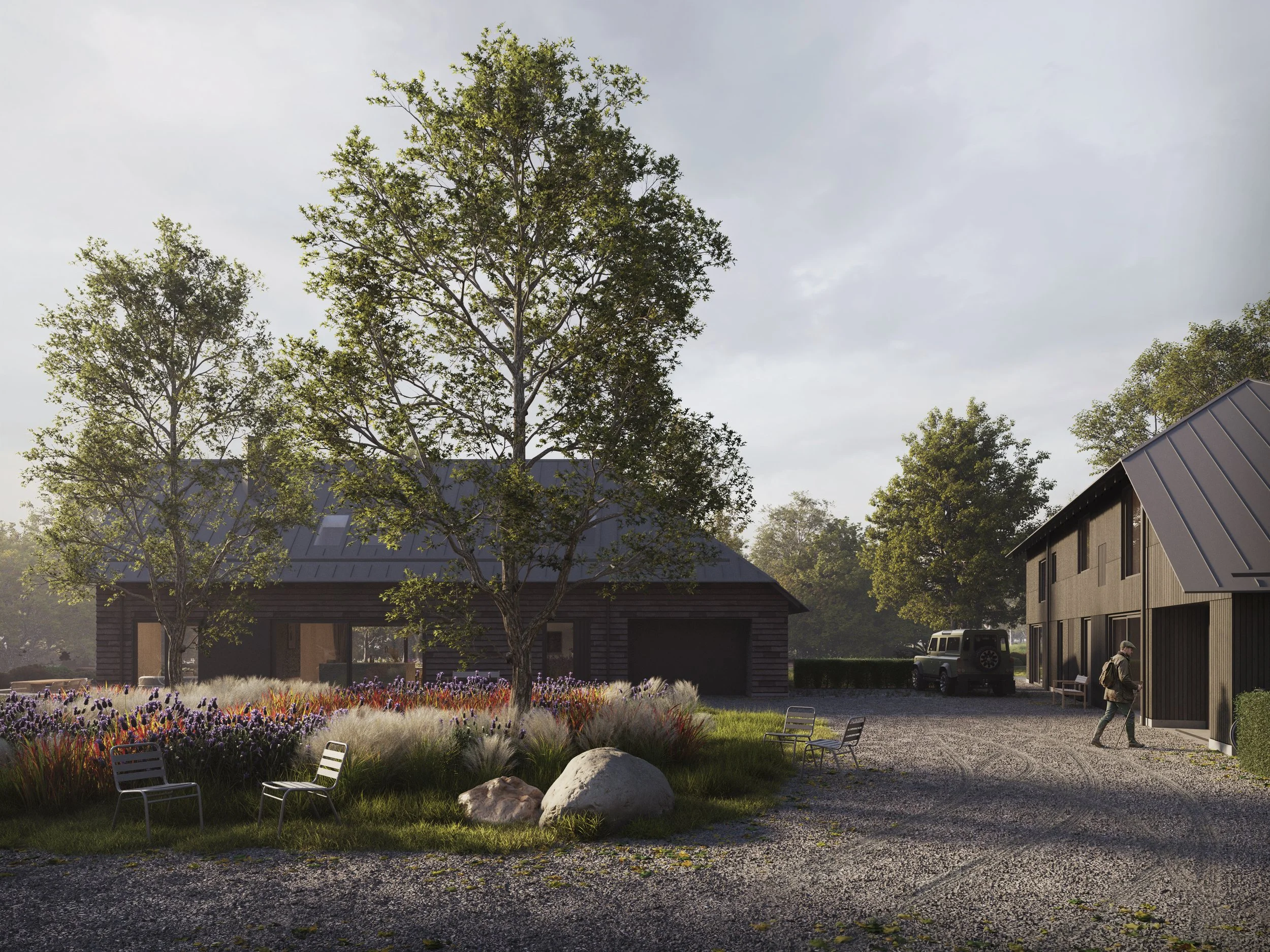
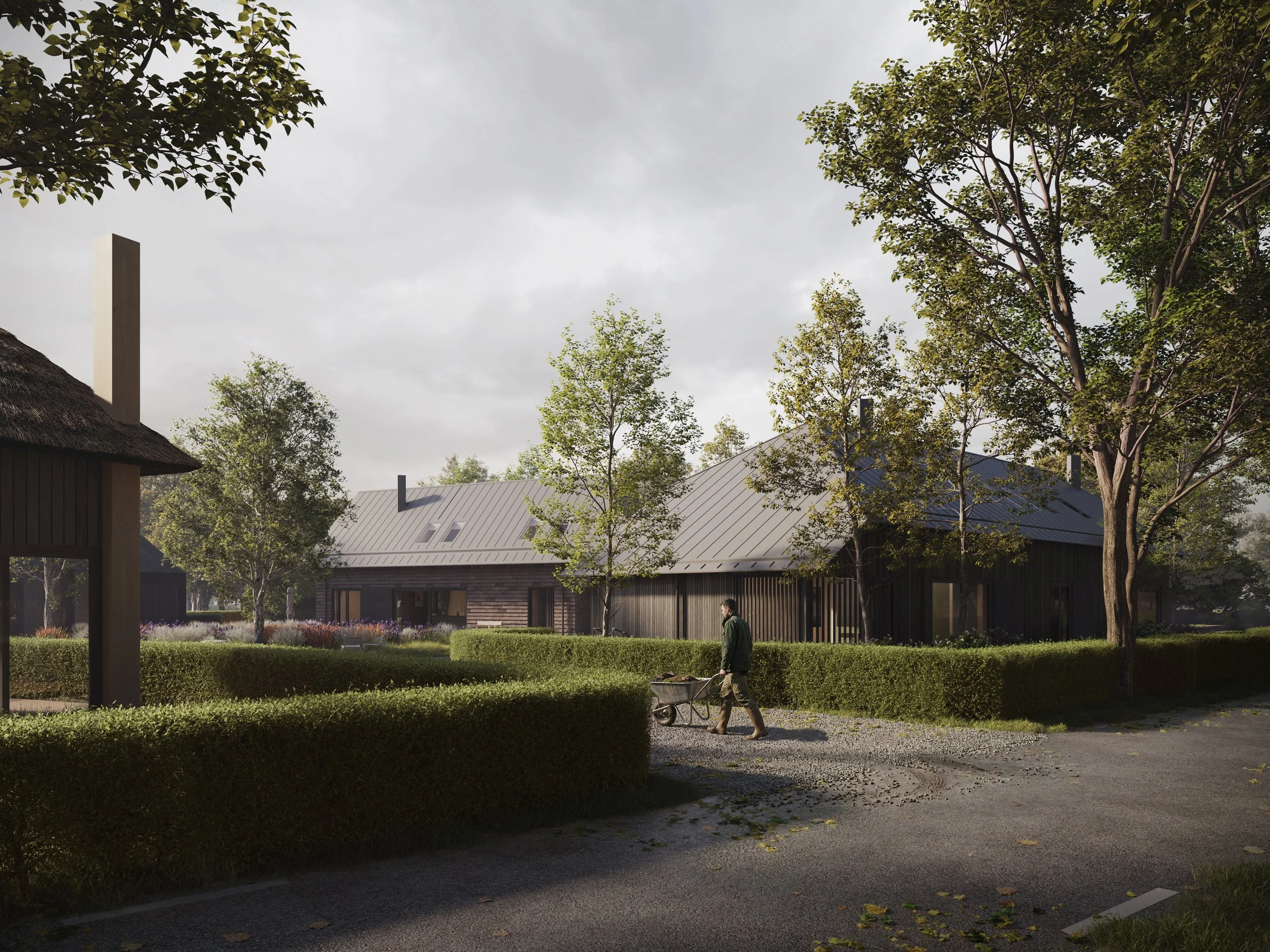
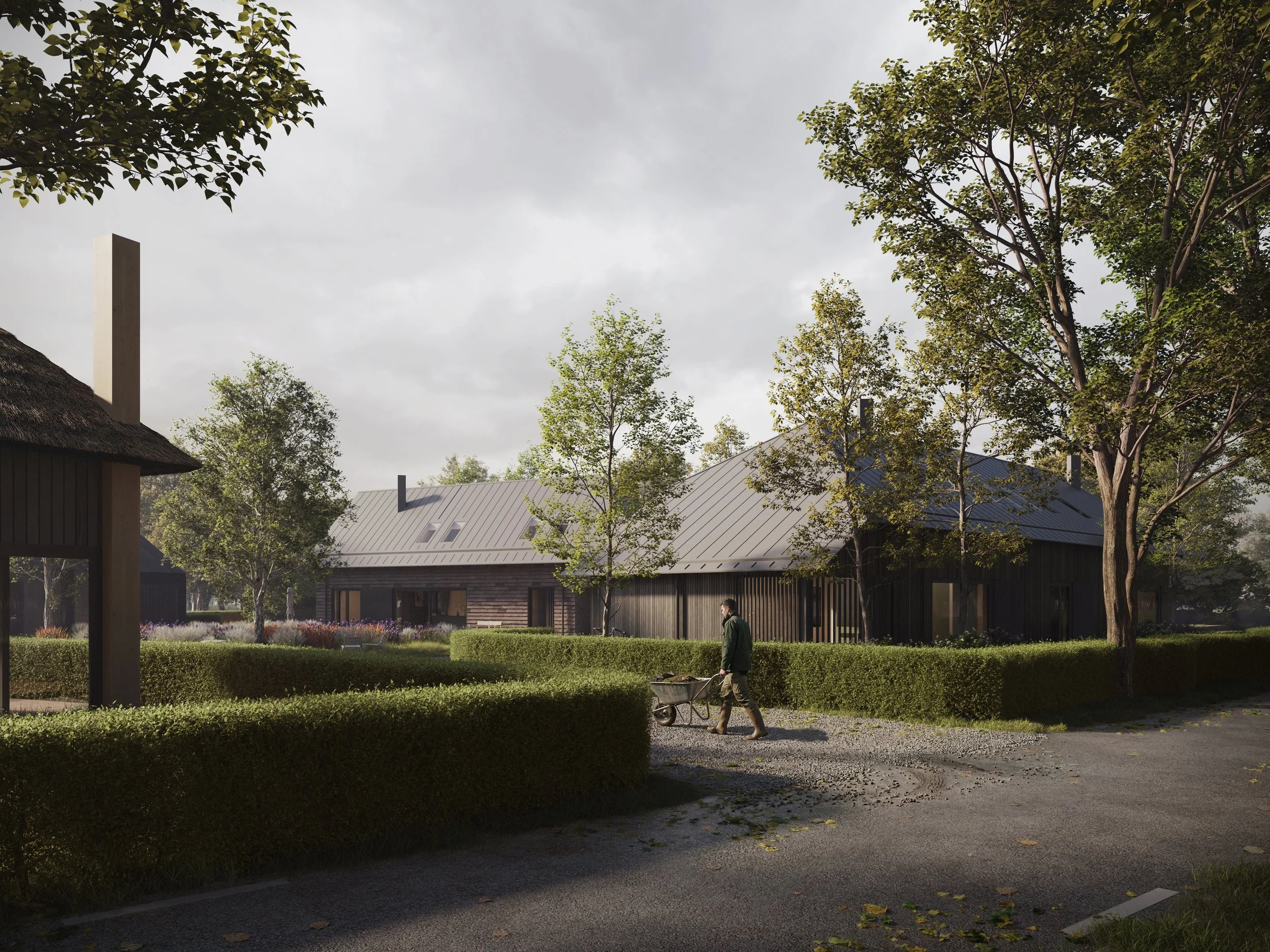
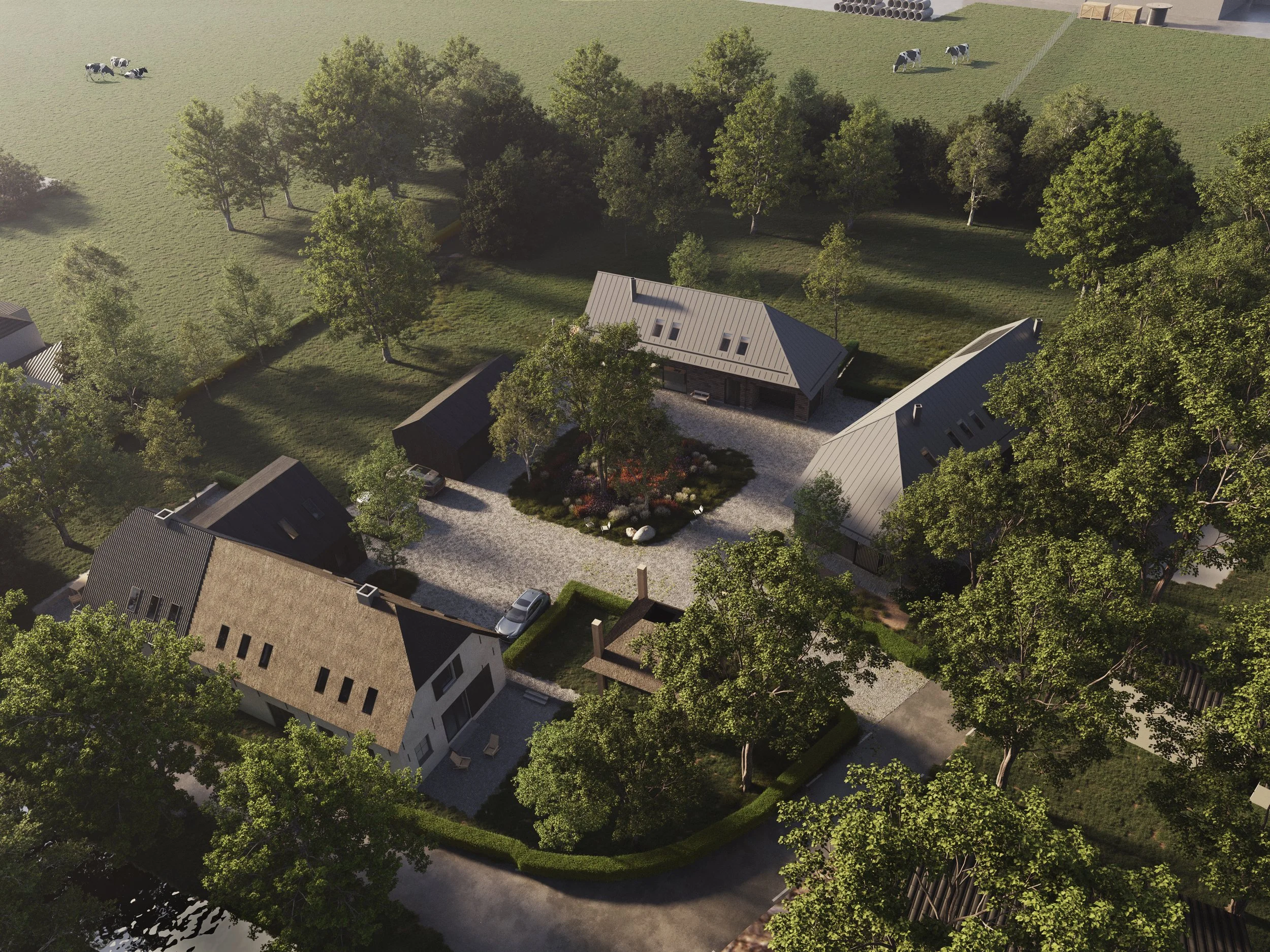
The “Kapschuur” project proposes a contemporary reinterpretation of the rural barn typology within the agricultural landscape of Cothen. Set among orchards and open pasture, the intervention is conceived not as an isolated object, but as part of a broader spatial reorganisation that includes the restoration of an existing farmhouse and the insertion of additional volumes within a masterplan by B2A Architects. Together, these elements form a calibrated architectural ensemble that negotiates between continuity and transformation.
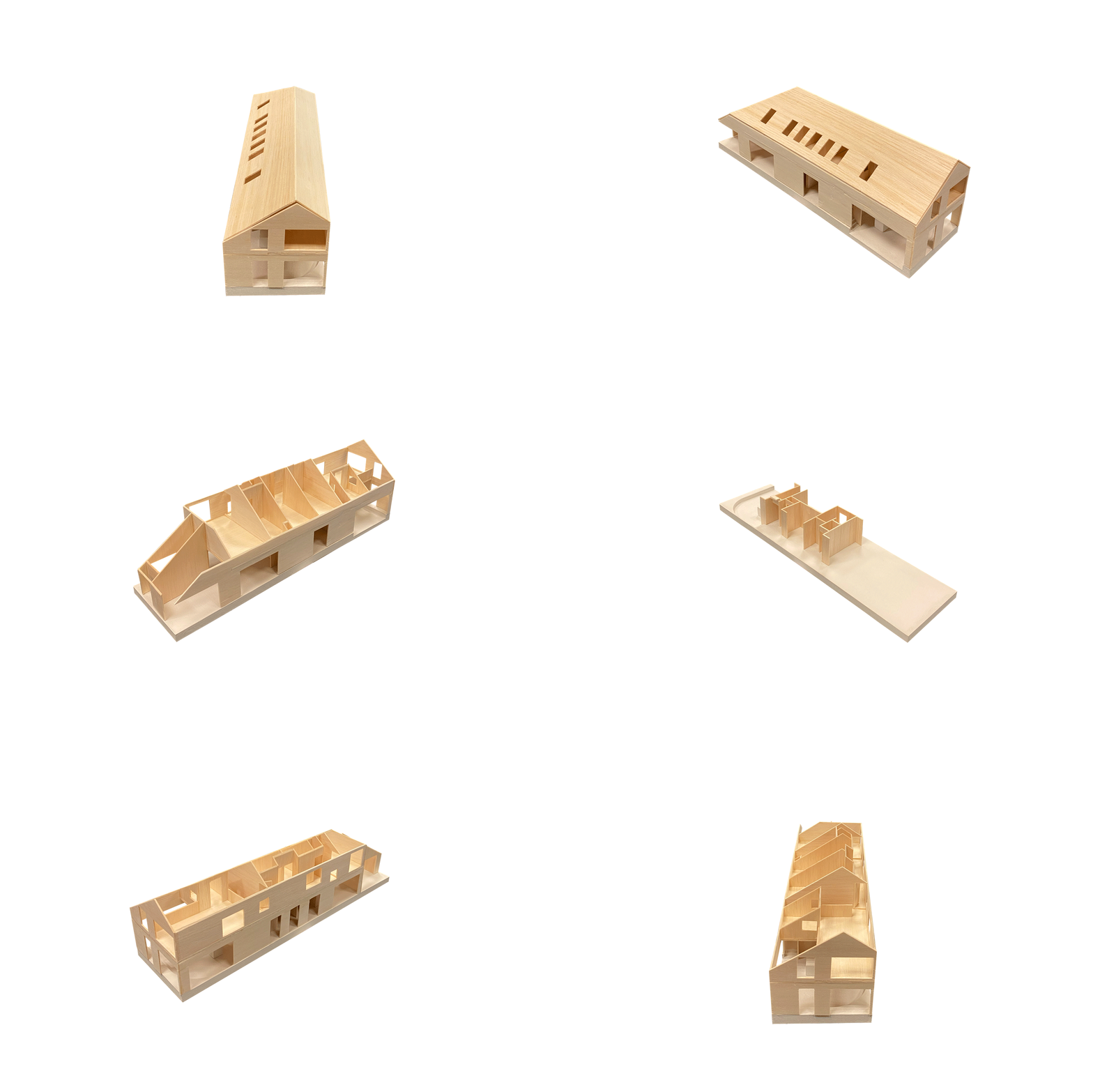
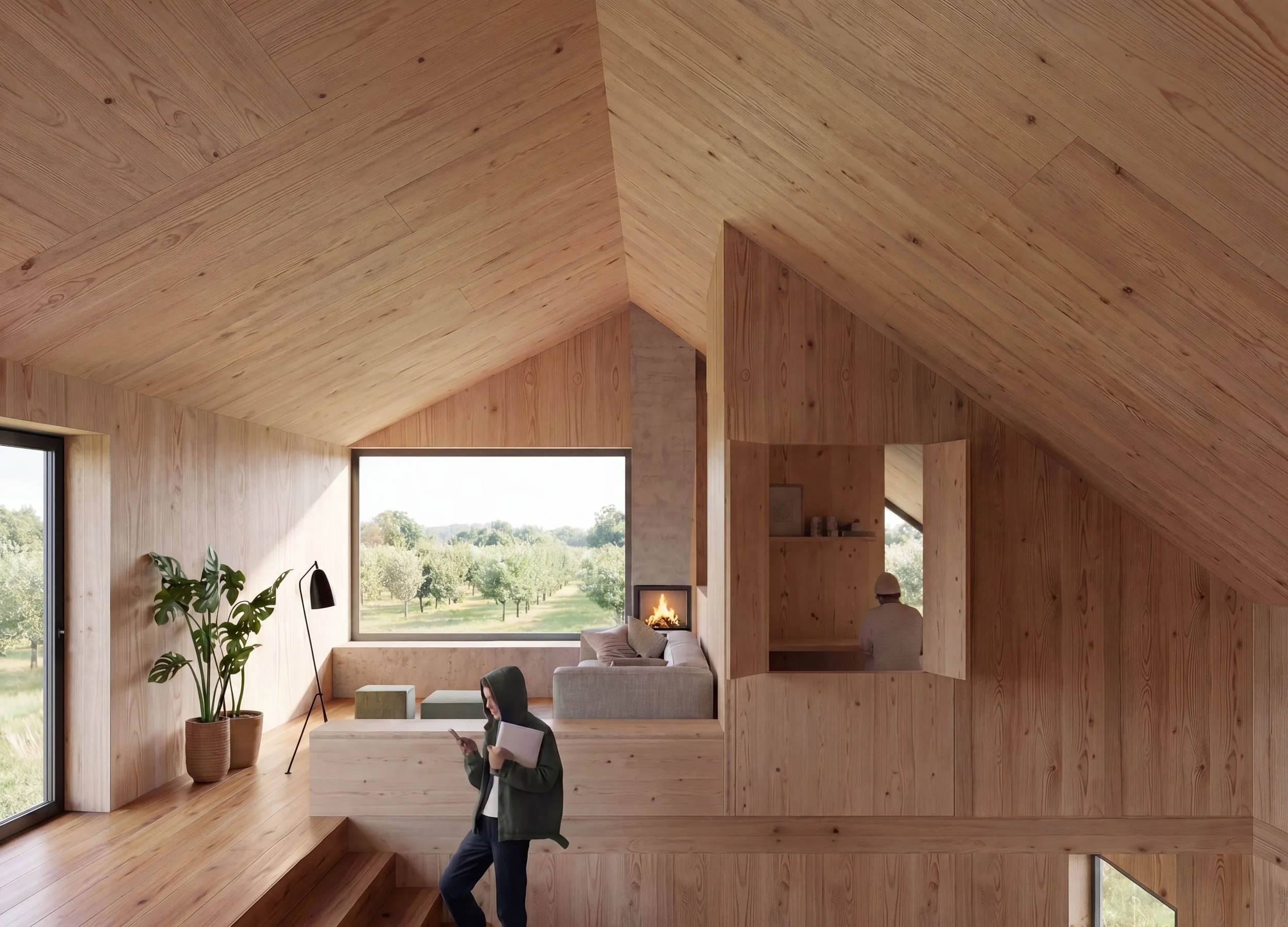
Rather than imitating vernacular form, the design abstracts the barn into a spatial and structural logic. A singular, oversized roof—supported by a cross-laminated timber (CLT) system—acts as the primary organising device, under which a layered sectional strategy unfolds. The project rejects a conventional horizontal separation of programme in favour of a continuous spatial sequence, where functions are distributed across shifting levels.
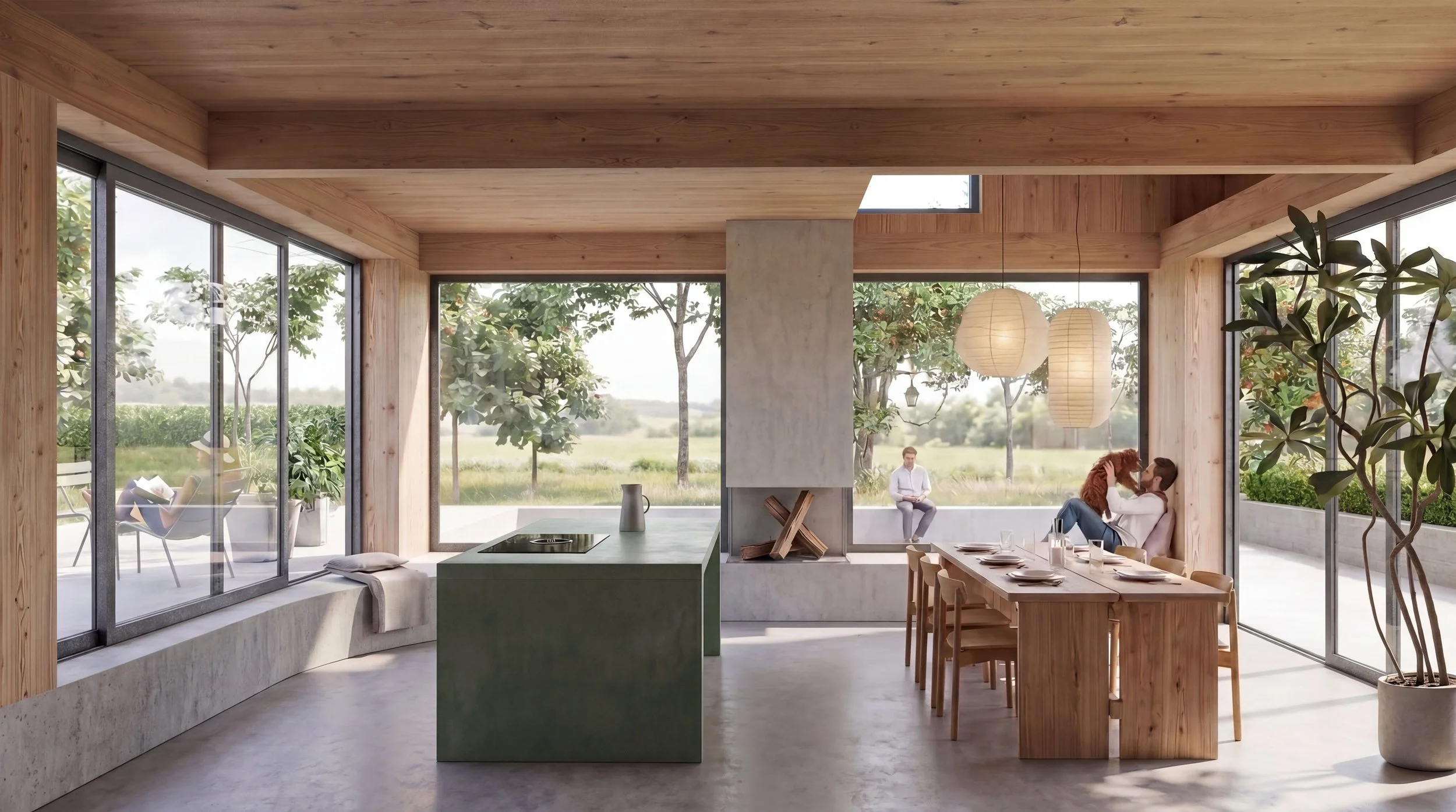
The ground floor is partially embedded within the terrain, creating a sunken living landscape that intensifies the relationship between interior and the surrounding fields. This inversion of the typical domestic hierarchy positions the living and dining spaces as the spatial and atmospheric core of the house. Above, the sleeping quarters and private lounge are elevated to capture long, uninterrupted views across the agricultural horizon, establishing a dual condition of immersion and distance.
The architectural strategy is defined less by enclosure than by the modulation of thresholds. Full-height glazing and large sliding elements dissolve the boundary between inside and outside, extending domestic space into the landscape while maintaining the reading of a coherent volume. The façade operates as a thickened membrane rather than a fixed edge, carefully balancing openness and protection.
Materially, the project situates itself within the language of agrarian construction. A dark timber envelope recalls the tonal depth of surrounding barns without literal replication, while the zinc-clad roof introduces a refined, contemporary counterpoint to the adjacent farmhouse. The result is a deliberate tension between permanence and reinterpretation, between rural continuity and architectural abstraction.
Structurally, the use of CLT enables both precision and reduction, aligning construction logic with sustainability ambitions. Prefabrication, material efficiency, and a reduced carbon footprint support generous spans beneath the roof while minimising environmental impact.
Environmental performance is embedded as an architectural driver rather than an afterthought. High-performance insulation, triple glazing, photovoltaic systems, and a heat pump collectively reduce operational demand, reinforcing the project’s alignment with a low-impact rural dwelling model.
Ultimately, “Kapschuur” is not an object placed within a landscape, but a sectional field condition—an architectural framework that redefines domesticity through topography, thresholds, and continuity with the constructed landscape.
Exterior visualisations by Render-lab, Berlin